Home

Lightning Strike

1 Comment

If you watched the national weather news for the week of April 29 – May 5, you may have heard bits and pieces about the flooding and storms in Kingwood, Texas. Lots of rain, both here in Kingwood and much more rain north of us into the West Fork of the San Jacinto River drainage and The East Fork of the San Jacinto River drainage. In essence flooding Kingwoods from 2 directions and 2 different watersheds.

The Northern portion of the lake is fed from the East fork of the San Jacinto River and from the west by the west fork of the San Jacinto River. Drainages for the rivers are from two distinctly different areas. The west fork feeds into Lake Conroe which does provide some retention but Conroe was full and the gates to the downstream portion of the river had to be opened…..causing a big rise. The east fork feeds unfettered by a dam directly into the lake.

Thursday May 2nd Kingwood received 7 inches of rain while the drainage feeding Conroe may have received 20 inches upstream and up on the East Fork, experts predicted that the river may crest at nearly 15 above normal. One potential victim of the high water may bee the apiary that I have up on the north side of the lake. The property owner sent me a video with the two hives with their entrance’s covered by a foot of water and more to come. ( post flood note, one survived the other did not.

Let’s talk about the storm that hit Kingwood. Thursday morning May 2nd it was a wild down pour. I know first hand as I went canoeing down Kingwood Drive to my morning urology appointment. Made even wilder by the fact that my truck was in the shop and I drove my daughter’s Kia Soul, not really a canoe. I was afraid it would float away as I navigated around multiple flooded out vehicles on my way. Poor decision on my part but……Her car did not drown, but it did get a soaking. While I drove, my daughter and her cats were house bound during the 7 inch down pour. Powerful lightning and thunder display all over Kingwood and right over out house. Around 9ish the house rattled and shook with a very, very close lightning strike……scared the cats as they scurried off upstairs and woke my wife from a dead sleep. But…….no one knew that our tree had been hit.

Now, 2 days later I am out in the backyard and I am seeing odd big strips of bark scattered across to yard and wondering where the Hell did they come from. That must have been an odd wind I though. I started gathering them up and it dawned on me what may have happened. In 1971 I was drafter into the Army….great lottery number for my year, the number was 28. So, February of 71 Uncle Sam owned my butt for at least 2 years. My secondary school was not chosen by me, it was just luck I guess. My drill sergeant encouraged my to pick something, but I just shrugged my shoulders. He told me I was 11 Bravo material, that is the military MOS designation for Infantry. He and I were both surprised when orders came in for me to report to Fort Lee Virginia as a trainee for 92 Charlie 20, Petroleum Products Analysis Technician. Oh well.

One afternoon on the bus out to the training lab we had an awesome thunderstorm, rattling the window of the bus. Rain coming down sideways at 50 mph and small hail bouncing off the glass and on the road. All of a sudden a blinding flash 30 feet off to the right and an immediate massive clap of thunder. I turned my head just in time to see the lightning hit the top of a tall tree and saw a 2 inch wide strip of bark being peeled of from the tip of the tallest branch all the way to the ground in a single piece. Now, the memory caused me to get the source of the bark strips scattered across the backyard. Looking up I saw a tall branch showing a long missing strip of bark. My eyes followed it down as it twisted to around the front side of the tree and terminated about 10 feet off the ground.

Gathered up a bunch of strips and shredded pieces. I scanned the yard and saw some larger pieces that had land 25-30 feet away at the base of our fence. Likely thrown hard against the fence and dropped there.
The terminal end of the lightning ripped strip. I wish I could have been there to see it happen. It would have been an incredible sight. Albeit, maybe a little too thrilling to have been standing close when it happened.
Some of the larger pieces that got thrown across the yard and up against our fence.

A couple of garden notes, tomatoes are big and ripening, sugar snap peas are shriveling and dying in the heat, cucumbers are climbing, potatoes are being dug up and beets, just a few, are ready to harvest. Two honeybee swarms captured in the backyard, the wet wet and humid weather has slowed the bees down drying the honey out so they can cap it. Mother Nature loves to throw curves.

TTFN

Bishop

Witnessing a Swarm Arrival…..Honeybees

2 Comments

March 27th 2021 I witnessed my first ever swarm arrival. I have been the recipient of swarms taking up residence in one of my boxes, whether is be an actual swarm trap, designed purposefully to capture swarms, an old hive body or a water meter box. On this day I heard and saw tens of thousands of bees in the air and descending onto and into my swarm trap trap box. It would be an understatement to say that I was in awe. With the volume turned up you may actually hear it in my voice.

During the swarm arriving event and throughout it’s duration the bees are non aggressive. They have gorged and loaded themselves up with honey before leaving the old hive with just one goal…….build a new home for the queen to lay eggs in and to grow the colony. Swarming is nature’s way of growing and spreading the colony’s genes. It is usually the old queen that leaves with approximately 50% of the workers. Left behind are the other half and most likely, a queen ready to emerge from a queen cell. There may be many queen cells but the first to emerge kills the others and then prepares to go on a few mating flights. If she is successful she will return mated and having stored the semen of 15 to 20 drones, male honeybees. The drone is a sacrificial portion of this life cycle event. Drones mate and die quickly in most cases. Mating is usually done in a drone congregation area at a distance that reduces the likelihood of the queen mating with a drone from her own colony, thus ensuring diversity and reducing the chance of inbreeding.

My first witnessed swarm arrival and luckily it was in my own backyard. I am standing in the middle of the swirling bodies, tens of thousands of them, T-shirt, shorts and Crocs with no socks…..another story or two there.

One of the amazing things to see after the swarm arrives is the collective action with the workers once the queen is inside the box. Here the queen’s pheromones are fanned by thousands of wings spreading itout across the yard like a sirens call. Once her pheromone is spread they come running……literally marching in to hive at what appears to be a dead run. The “march” is another spectacle that is truly amazing to witness.

Bees marching into the swarm capture box not long after arrival.

I will share more of my experiences with my bees with all y’all.

TTFN

Bishop

Bee Season

4 Comments

“Looks like bee season is starting early. Early bee season means unmanaged hives, both wild and commercial will cast off swarms. I am a beekeeper of wild/feral bees…….yes I may be a little bit wild, ……My bees are feral, bees with “unpapered” pedigree. They may have an abundance of European pedigree, Apis mellifera. Bees in the wild may have started of as Apis mellifera but as they became feral, the wild queens do not discriminate and will mate with any drone. In fact, on her several mating flights, she will find a drone congregation site filled with many thousands of drones of questionable ancestry. The benefit is diversity and the down side is, Texas in the south half of the state, has lots of drones with Africanized genes.

Why is that important? Africanized bees were developed in Africa…..go figure huh! They were a cross between Apis mellifera and the East African lowland honeybee. They were more productive…..yet more defensive. Brazil imported some and guess what? Twenty-six swarms escaped and began working their way North. California got a surprise dose of the Africanized bees in 1985 before Texas or any other location in the US due to a shipment of oilfield equipment holding an undetected colony of Africanized bees to my old stomping grounds near Bakersfield California. The Africanized bees arrived in Texas in 1990 and were detected around Tucson Arizona by 1994. Northern beekeepers should dodge a bullet as Africanized bees do not care for the cold weather.

I do have some spicy bees but, knock on wood, nothing so spicy that I can’t safely work them. Africanized bees tend to spin off swarms more often and will take up residence in smaller cavities, i.e., like water meter boxes. They can be very productive, so I just tend move carefully/slowly, well protected and respond at the first hint of the alarm pheromone…..My first year of beekeeping taught me a good lesson and was way to slow to respond. Nine years later I have not repeated that mistake.

Guesstimate 70-80 stings to head and face…….long story…….I will tell it one day.

My 73rd birthday was the 12th of March and a day later the swarm birthday gift arrived. They were unexpected, they chose an empty upside down box and yes, I was not quite ready to receive them……very quickly I rounded up gear, empty box and set the hive box up to receive the bees. I will tell you that swarms are very docile, very true……but, I am such a handsome lad with a long memory so I always wade in protected. Well almost totally protected……In the video link I am wearing Crocs with no socks. I did dance …..backwards, relatively quickly, at a couple of points….No stings…….so see what you think…..I may edit this in the future….

Don’t laugh too hard. The receiving hive body is in place now and I gather them up. My wife and young grandson were in the yard watching me unprotected and SAFE. My Daughter in Law and younger grandson were watching from inside.

This swarm was rehomed to my son’s good friend Clayton and his wife, Aurora. Clayton videoed the arrival unsuited and when I let the bees out they greeted Clayton rapidly.. No stings but they made it clear he needed to move away. I had a good laugh……..

Clayton is a big ole boy but still moves pretty damned quickly.

I hope to have a new swarm report and a garden update very soon……

TTFN

Bishop

Honeybee Trapout For a Friend

Leave a comment

When it comes to rescuing honeybees I have decided to leave that for the younger keepers and those more willing to work off ladders and willing to suffer the Texas heat. I am willing to go round up a swarm out of a bush or off the ground or, as in this post, a low to the ground trap out opportunities. In this case the only entrance was at the base of a tree and lent itself to a relatively straight forward trapout effort for me.

So, what is a trapout? I had to laugh at my research for this blog post. There was one site that referred to the process as “glacially” slow…..isn’t that the truth. Three to four weeks is a likely time frame. It requires that all entrances to the colony inside whatever it is are reduced to one single opening. I had one several years ago before I narrowed down my acceptance of such jobs, that went on almost 6 weeks and about $40.00 of caulking to seal the roof line access gaps. Yes, I got them out, but no, I did not capture them. Success too many times is minimal but here in the south, chances for success are much better.

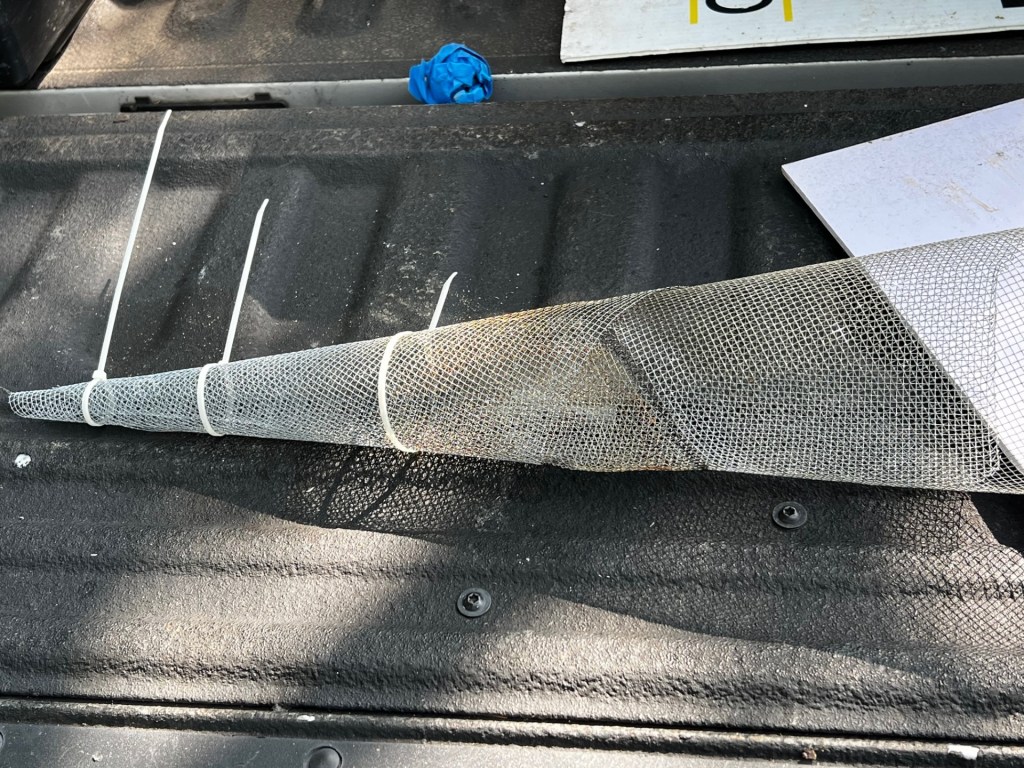
How did I do on this effort? I was very pleased with my one-way escape plan. The cone was as perfect as I have ever built. The tree lent iself to the process with it’s low opening and broad trunk base making the escape truly one way. Using the 1/8 inch hardware cloth is sized so bees cannot squeeze back in and the cone long enough and tight enough at the escape point to prevent a return to the colony in the tree. Returning bees are guided primarily by scent and prior orientation flights for the tree’s access hole. The cone screen material actual makes it impossible for the retuning bees to see the 3/8 inch escape opening.

First things first. I brought out a 10 frame deep box with 4 or 5 frames of drawn comb and the rest were undrawn frames with foundation. In a classic trapout I could have opted to add a frame of brood and nurse bees along with a queen but chose not to….It was a long shot, but I hoped I could get returning foragers into my box, adding nectar and pollen while awaiting the queen and attendants to be starved into leaving and taking up residence in my box.

I measured the tree base and cut a screen big enough to more than cover the hole with plenty of lagniappe to adequately force the bees out through the cone.
My damn near perfect cone – pat myself on the back!!!!!!
Box set near the base of the tree and prior to adding the escape.
All set and after an hour or two observing and 2 beers of some sort, I was pleased to see that bees could only escape through the cone and not find a way back into the tree.

Now, several week later I went out to observe. Clayton, the property owner, informed me that there has been no activity escaping through the cone for quite some time. I drove out to see what was going on. There were maybe a few hundred bees in the box, some the drawn comb was wet with nectar indicating that the escapees had been working but not any evidence that they had tried to set up housekeeping. Then I noticed some small hive beetle larvae slurping up nectar on some of the frames but not to the point of sliming and ruining the comb……Now scramble time for me. It became obvious that the colony did starve out and likely absconded. The few bees remaining were either stragglers or robbers. I did have a very nice swarm captured several weeks earlier and they seemed to be growing fast. I placed them into a 5 frame box and prepped them to travel and take up residence in the box at Clayton’s place. I should actually say, at Clayton and Aurora’s place.

The swarm capture from several weeks prior…..healthy size swarm.
Feeder in place and entrance reduced to help the colony manage potential robbers.

I added the previously captured swarm and purged the few wet frames and those with small hive beetle larvae with good frames. Now time to seal the hole in the tree, otherwise the scent will be a magnet to any bees looking for a home. Success in some ways, maybe not so much for the colony that absconded, summer is not a good time for bees to swarm……summer in this part of the world may be short on the resources they need. I needed a home for the swarm I caught so that is a win here.

TTFN

Bishop

Tomatoes and Planting Seeds

2 Comments

My small varieties of tomatoes are kicking in. The larger red ones are called Juliet and they do really well throughout the hot and humid Houston summers. The small ones are called Sugary and yes, they are sweeter. Hopefully they will do well through the summer. None of large varieties have started to show color yet but, thankfully, even with the abundant rains recently , they show no signs of cracking or splitting. The 25 cent piece in the photo is for reference on sizes.

Juliet and Sugary bunching type of tomatoes. Both are yummy. The Brandywine, Cherokee Purple and Celebrity will ripen in the next week or so.
My cucumber support. I used 3 panels of 4″X7″ reinforcing wire used in pouring driveways. Cattle panels are used by some people but they are heavy and pricier. Market More variety planted here.
The fourth panel I used to create an arch entering the garden. I have planted Blue Lake Pole beans here and they climb like crazy. Should also make it easier for me to harvest. I will promise to provide some follow up as the grow.

I added 3 mounds for some Early Yellow Crook Neck squash. I haven’t had much luck with summer squashes in the past here in Houston but have not tried this variety. Also planted Mammoth variety sun flowers and they truly are Mammoth. Sometimes rising more than 10 feet and the seed heads are maybe 15-18 inches across. The bees adore them and our local squirrels do too…..LOL

I do have potatoes to harvest in a couple of weeks. Red potatoes and some Yukon Gold. I will clean out the beets…..some of them have become huge. I will see if they are worth salvaging. The sugar snap peas are done…..hopefully I will do better with the Fall plantings of them. The Meyer Lemon tree has set a good number of fruits and another round of blossoms has just appeared….not sure about them but we will see. Honey harvest is still 2-3 weeks away. We have a very long waitlist and they are our faithful buyers, I hope I do not disappoint them this year.

My Muscadine grape vine looks really healthy this year and as the grapes begin to develop and mature I will post photos. At this point in time the blossom heads are tiny, tiny and just now starting to open up. My other challenge with the Muscadine Grapes will be fending off the robbing birds and I suspect some squirrels get tempted. My wife won’t let me pop the squirrels with the BB gun but I do have bird netting as an option….time will tell.

TTFN

Bishop

First Tomatoes….Next Few Weeks Will be a Feast

2 Comments

The small varieties are setting tons of tomatoes and today, May 4th was my first picking……not many but the gates are open. I guess Mother Nature whispered……”May the 4th be with you”……LOL. Yes, “kinda” corny, but I couldn’t resist. The surprise for me today, upon my return from babysitting grandsons in Denver, were the number of tomatoes set on my Brandywine vine…..I promise some photos later in a week…..maybe less.

Small and so very sweet.

I have quite a few beets that have blown up into to monstrous sizes in the past few weeks too. Hope they will still be edible. Sugar snap peas are almost done and now I need to get my Blue Lake Pole beans going. My two eggplants are blossoming but no fruit yet. The plants are robust looking so I think I may have some eggplant lasagna in the future. I was gone for 8 days up to Denver and the weeds have jumped ahead and will keep me busy for the next week or more.

Bees……next few days and into next week will find me evaluating the honey stores and looking to see if I can rob any to take care of my customers. wish me luck!!!!!!!!

TTFN

Bishop

Backyard Farm Resurrection

4 Comments

June of 2021 was my last update, don’t get the wrong idea…….I haven’t given up on the garden……but nearly given up on my blogging. Oh, I have good intentions, taken photos, jotted down notes in my brain……an unwise and not secure place to store thoughts…LOL. A friend began shaming be about the hiatus and I agreed to be more diligent!

One of the aspects of gardening that bothers me, but I also realize that thinning when planting by seed is a necessary evil…..the taking of a life….pulling out a crowded seedling and seeing it suffer, wilt but yet, create the circle of life becoming organic material for the soil. oh well, necessary for those that grow to harvesting size.

Thinning activities are happening with the carrots and the beets. Need to be sure to wear my reading glasses because, too often, the emerging seedlings are almost twins!

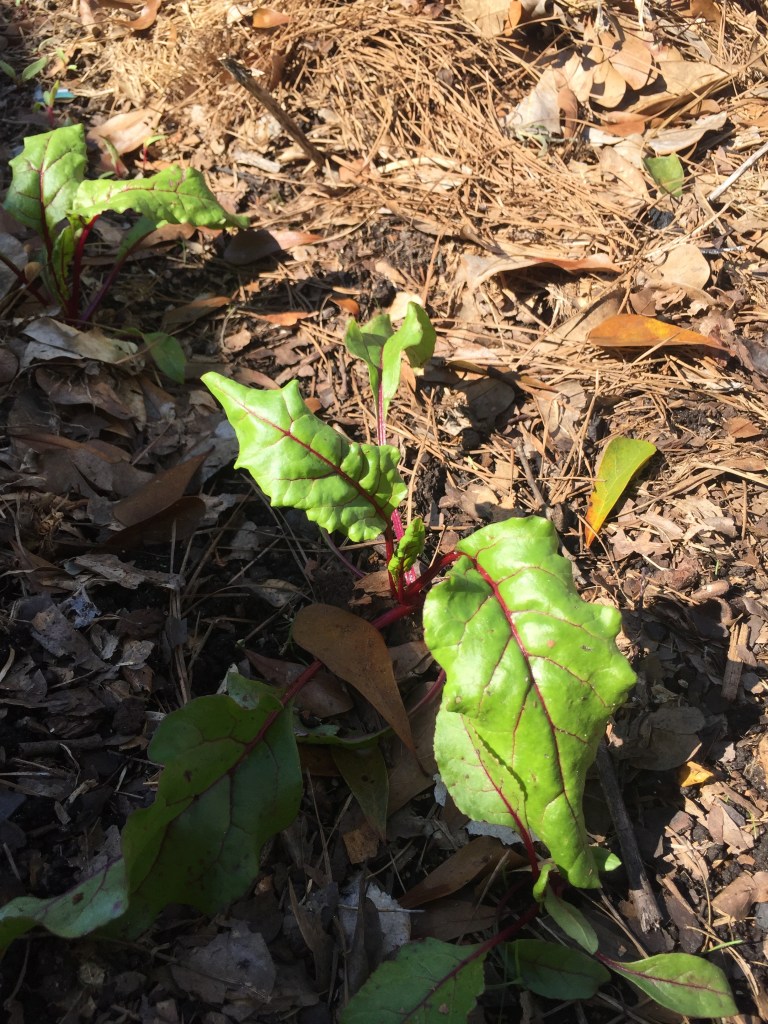
Some emerging beets previously thinned.
Carrots poking up through the leaf mulch. So delicate at this stage so I really need the reading glasses for my 70 year old eyes.
Some beets with a head start. My first plantings were from a packet dated for 2017 so germination wasn’t too good! latest beet seeds are 2021 season packets, both red and golden.

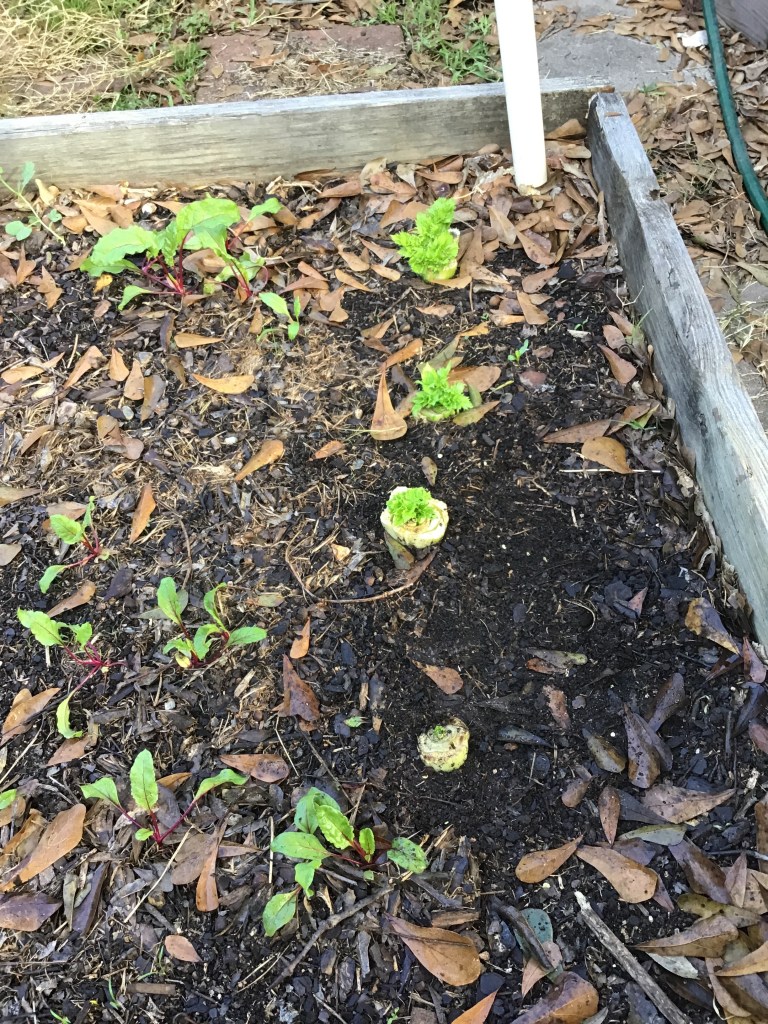
Sugar snap peas aren’t cooperating at all so I may have to try again in the spring. I have added some bases off of celery stalks and, lo and behold…..they are taking hold. Hopefully they take off and enjoy the cool Houston fall and winter.

It should be pretty obvious which one went in first and which one was last. I may continue and eventually make an edible border in the garden! They also share space with some beets….they seem to get along pretty well.

Bees seem happy and I will do my best to help them through the winter….I will share more about them soon…..really I will!

TTFN

Bishop

If I Am Lucky – Muscadine Jelly From My Garden

1 Comment

My vines are 4 years old now and put out a few bunches of grapes in 2020. It wasn’t enough to get too excited about so I combined them with the local Wild Mustang Grapes. I may not have quite enough this year for a discrete batch solely from my garden/backyard but it may be close. Timing may be an issue. ……. They may ripen when I am in Denver seeing my newest grandson.

Winter of 2021 I decided to learn how to prune the vines….my prior attempts were really just butchery. it was real actively simple if you follow instructions, not my long suite as my Goo friend John will attest too. If interested look into the archives for Goo Friend….. a typo that became a standard reference for my buddy, assistant beekeeper, beer drinking buddy, a long time ago mountain biking buddy and the list goes on.

Today June 11 marble sized
A few weeks earlier
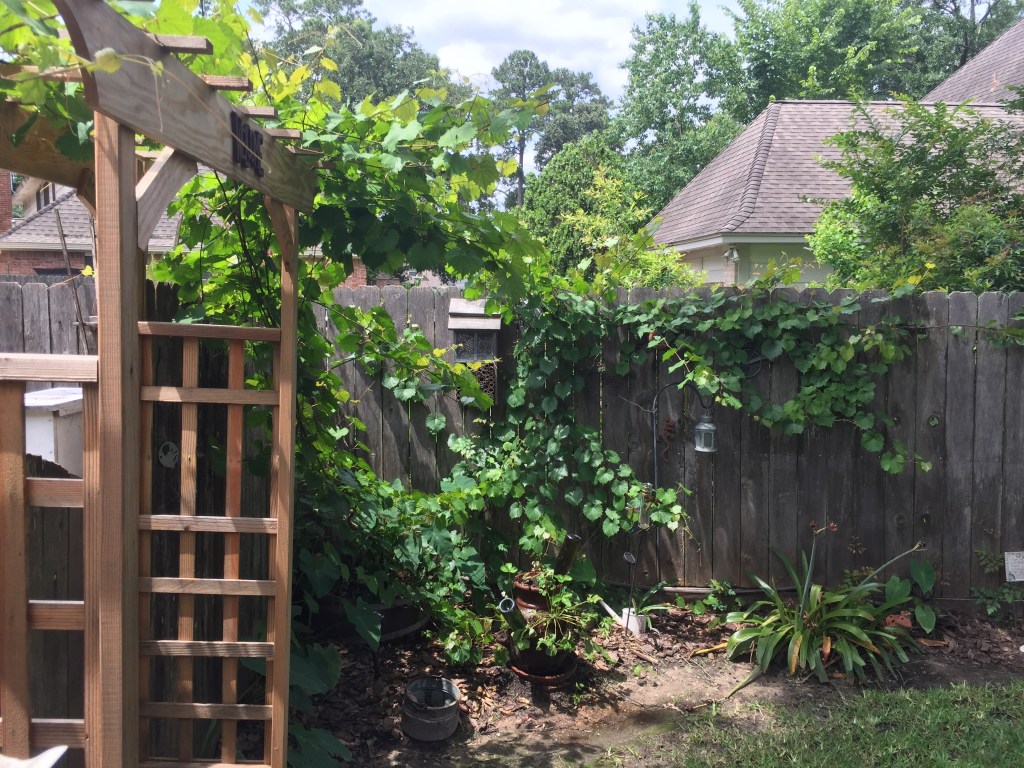
Covering the new arbor, thanks Ashleigh for the construction assistance, and being trained along the back fence.

An FYI, I must be doing something right because I have captured 4 swarms in my backyard this Spring/Summer. I am hanging in there at 16 colonies now but……the rains have had a negative impact. In some cases lots of nectar but they can’t get it dried out enough for honey to be capped. I shoot for 18% water content or lower. Other wise the wild yeasts may begin to ferment the honey before it is consumed.

Bee swarm consolidating itself into one of my swarm boxes.

TTFN

Bishop

Snow? It Snowed In Houston

3 Comments

Crazy as it sounds, a big blast of Canadian icy air made it as far south as Houston. For Houstonians it was brutally cold this morning, 16 degrees according to my backyard thermometer. It looks like it won’t warm much for a few days. Obviously my vegetable garden will nor fare well. I covered a new bed of carrots with fingers crossed that they will make it. I covered my strawberries with a couple of inches of leaves and I suspect they will survive. The Romaine lettuce had already started to bolt, so no loss there. My biggest concern was for my Meyer Lemon tree. I have it tented and a small light bulb included under the tent to keep it, hopefully, warm enough.

Lettuce is biting the dust. Upper left is a section of carrots that are covered and fingers crossed they survive. Top right is my topbar bee hive and I believe the colony is strong enough to survive.
I have put a bar in front of the opening to the hive and completely closed off the similar opening on the back side of the box.
There were a couple of bees slowly moving around near the entrance so I do have faith that most are clustered up tightly and keeping the central portion warm.
Swiss Chard standing defiantly against the freezing weather…..at least for today.

Roads are icy and I don’t have any place to go so, sit tight and hope the power stays on! A couple of my pineapple plants are in the garage and hopefully warm enough. If we do lose power at least my home brewed beer will stay cold…..always a silver lining. I was proactive enough to pull a good portion of my beets yesterday and ready to be roasted today!

TTFN

Bishop

Catching Up…..Spring is on the Way

2 Comments

The quiet time of winter is over here in my backyard just north of Houston. I have been eating beets from the garden as well as some carrots. In fact, last night I grilled a spatchcock chicken along with a handful of freshly pulled carrots…….FYI, I should have pulled up a few more carrots!

I love this water color app called Waterlogue…..orange and a couple of yellow carrots freshly pulled.
Obviously not enough carrots. Olive oil, a little sea salt and rosemary. 8-10 minutes over direct heat and about 15 minutes over indirect heat with the foil sealed shut. FYI, this is a good size of carrot to cook through and not be crunchy in the center.

I have both red and gold variety beets growing along with Romaine lettuce, about 50 new Chandler strawberries. The radishes are done and I could probably plant more but I’m the only one that eats them! Sugar snap peas have been planted, along with some turnips and another round of beets.

Bees are doing well and the early spring bodes well if the weather stays wet enough for the early spring nectar flowers. For you folks in Texas here is a very good list, link attached. Late winter does include my Meyer Lemon tree as a good nectar source….. looks like it will bloom very soon. https://aggie-horticulture.tamu.edu/travis/wp-content/uploads/2016/04/EAGF-2017-Central-Texas-Bee-Friendly-plants.pdf

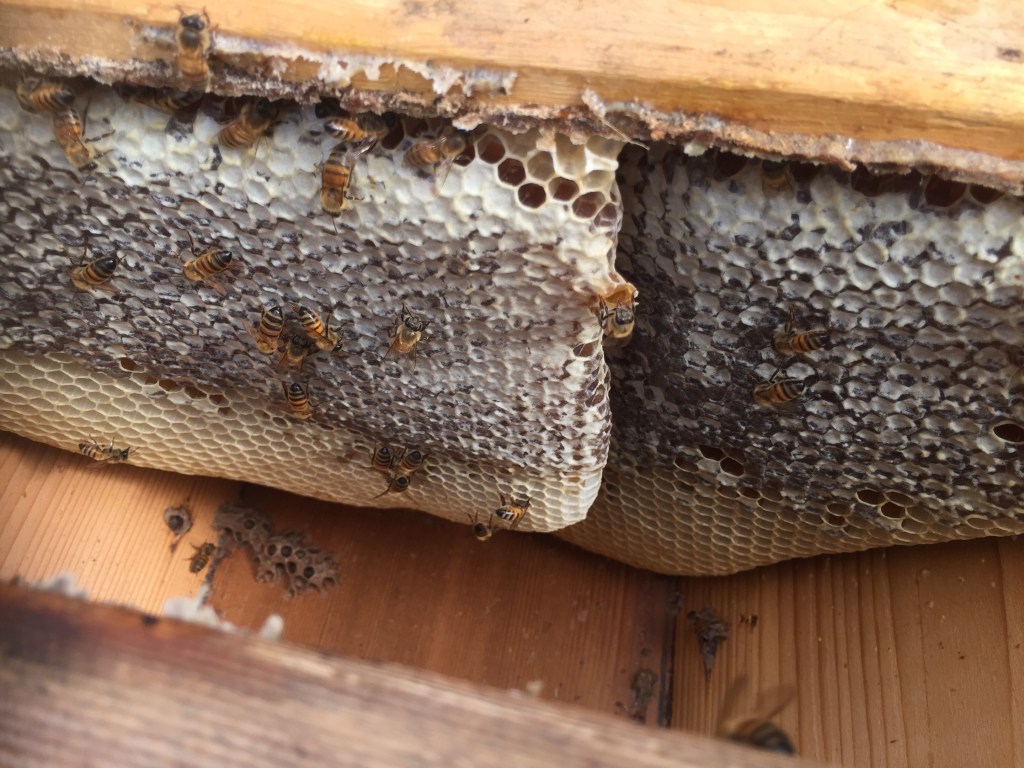
My backyard topbar hive. Bees are storing honey…..this comb is a little wonky so I will pull it and maybe two other misshapen bars to crush and squeeze in a few weeks once I see more nectar flowers blooming.
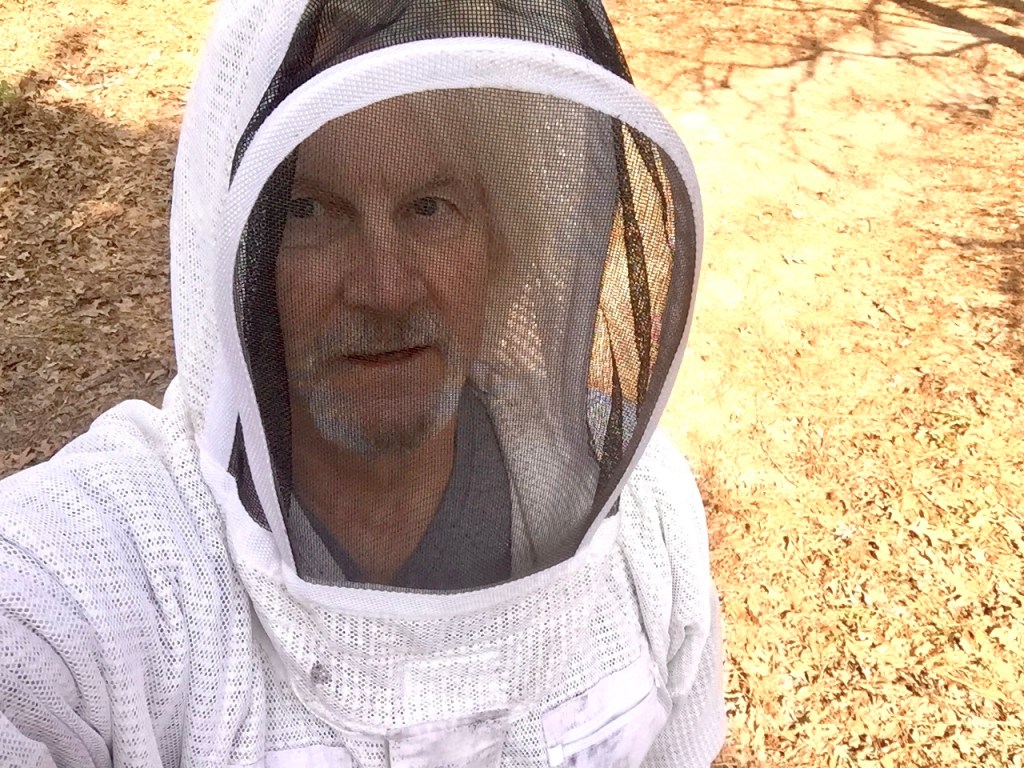
Suited up but not for the backyard bees….my backyard bees are pretty sweet, no gloves or suit needed but I do always wear my veil. I was suited up here because I was cutting weeds and brush around some of my friskier bees!
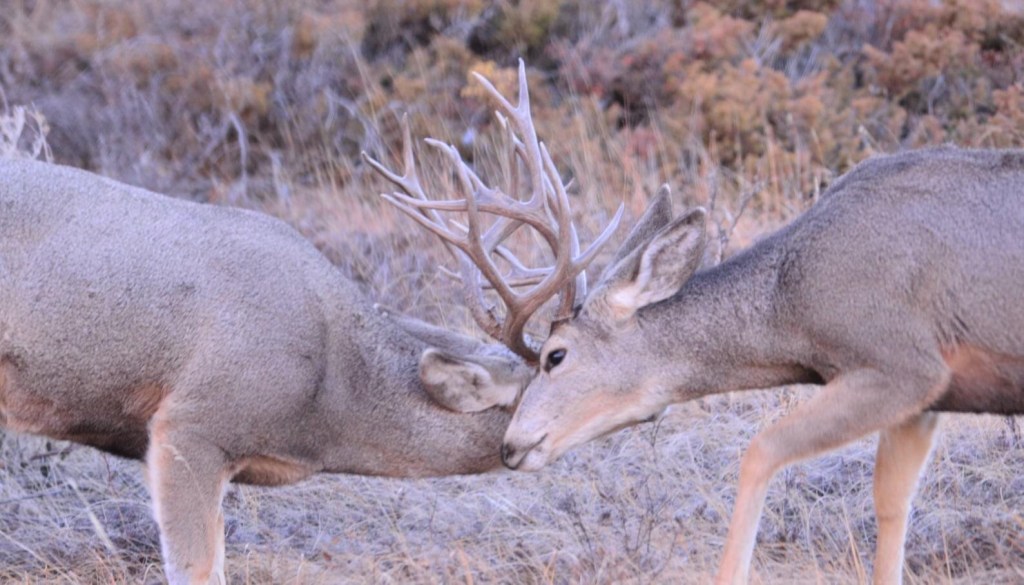
Bonus image from our recent trip up to North Dakota. These two whitetail boys were sparring a bit, not real energetically but grunting a little.

More spring stuff in the works.

TTFN

Bishop

Older Entries