I hope to get a jump start on prepping the garden for a productive spring season. My 2023 season was OK but I let the garden get away from me a bit and grow “kinda” wild. My efforts to grow cucumbers and green beans were a total bust but the early part of the growing season was good for tomatoes and beets but not much of anything else. I have the beets seeds in the ground and sugar snap peas are coming up nicely. So………I spent a little time today prepping some good, well rotted and beautiful compost to properly feed the green babies.
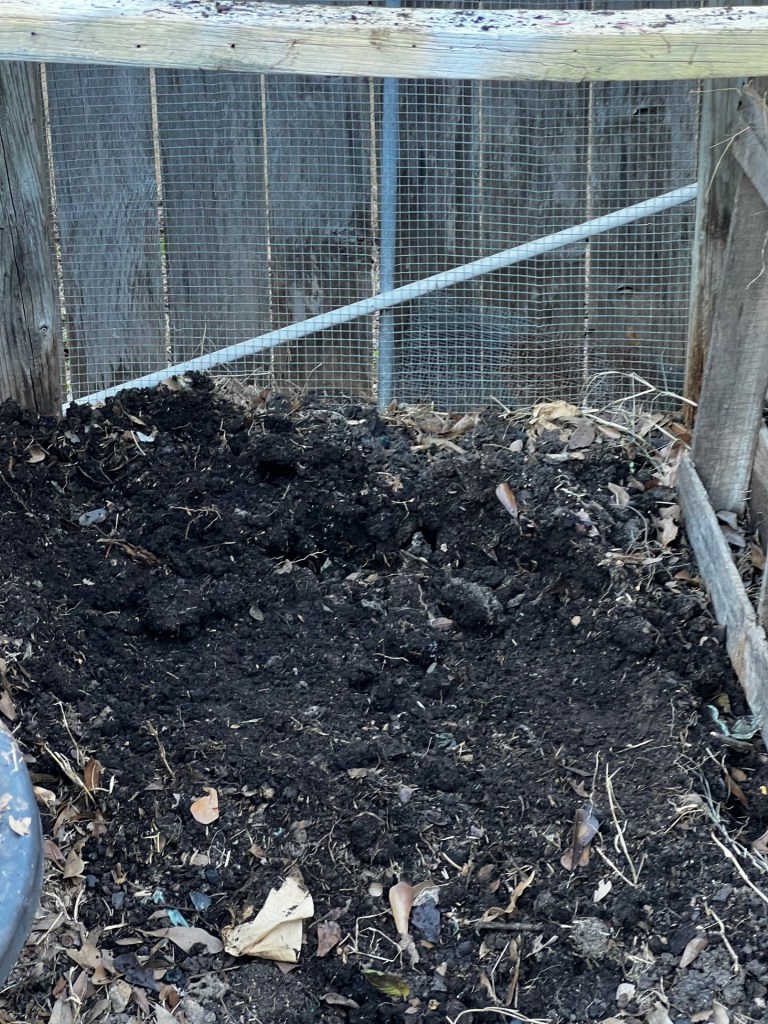
My two compartment compost bins are set up for a lazy man’s compost pile. Most of the wood used to build it came from mine and my neighbor’s fences having been blown down by Hurricane Ike in 2008. I have since added some pallets as dividers and as fronts to hold the compost materials in check. We were dead center in the path and eye of “Ike”…..and it was amazing, The eye was 60+ miles wide and since we were dead center…….it was eerily quiet for well over and hour before the back side of the storm hit….my wife kept asking if the storm was over……..no Hun…..just wait…….So the 100 mph pinecones hitting one side of the house in the beginning were now being launched at Major League fastball velocity to the opposite side!!!!!! I did step outside in the dark looking up and watching for awhile as the eye passed…..I can scratch that off my bucket list…..actually was never on my bucket list but I can lie a little …..LOLLazy man’s compost…….I had transferred the top layer from this bin, not much decomposition yet, over into the right hand bin/compartment until the dark and mature compost in the bottom was exposed. “Lazy” in that I don’t turn the pile except once per year…..and that time is now. I pull shovel loads of dark rich compost and dump them into a 1/4 inch screened box and shake, shake, shake, until it is all uniformly crumbled and ready to feed the babies I recently planted. The plants fed with good compost are really very happy and show great growth. The finely screened compost is shown here in my wheelbarrow. I will spend bits and pieces of time going forward shoveling and sifting until I get to the bottom of this compartment…….It won’t be one of those projects where I will bust my ass and do it all in one weekend……..Nope…..it will be spread out through the growing season. The right hand bin is 4 feet by 4 feet and almost 4 feet deep! Holding potentially 64 cubic feet…..more than two cubic yards of material…..
There is still potential for another freeze but I have my fingers crossed it won’t be a hard freeze with much, if any, duration. End of February is my target this year to get tomatoes into the grounds. Bold yes, but why not…….And dammit I want some cucumbers too. I am counting on my compost to provide the growth essences to create lush and satisfying plants.
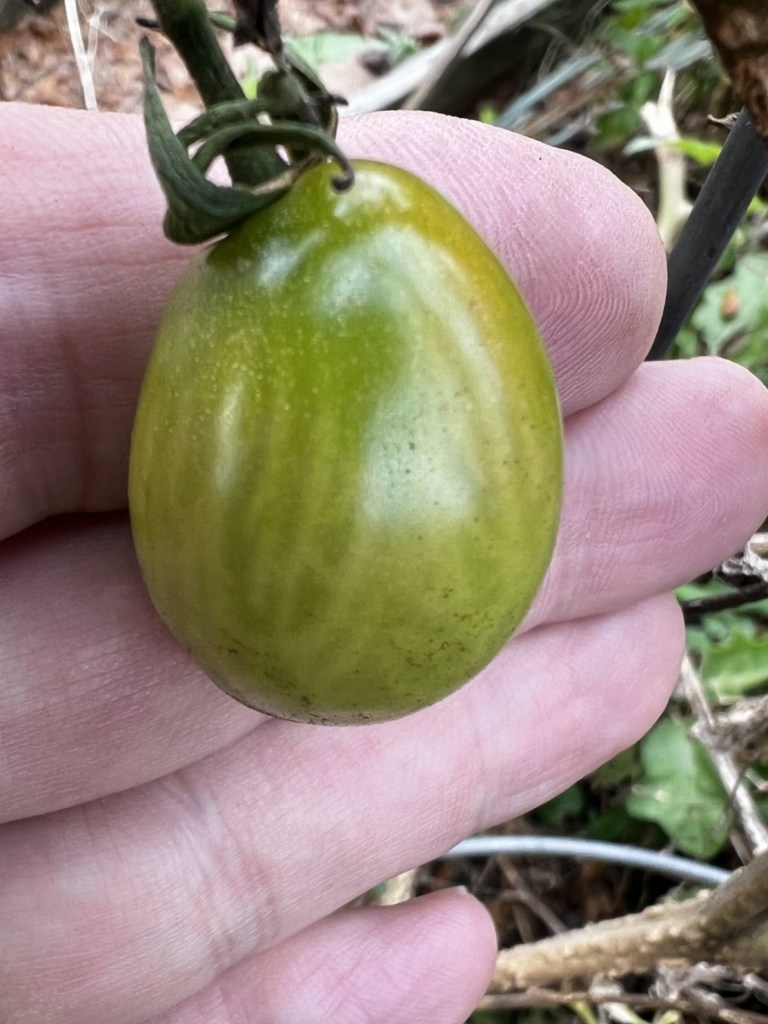
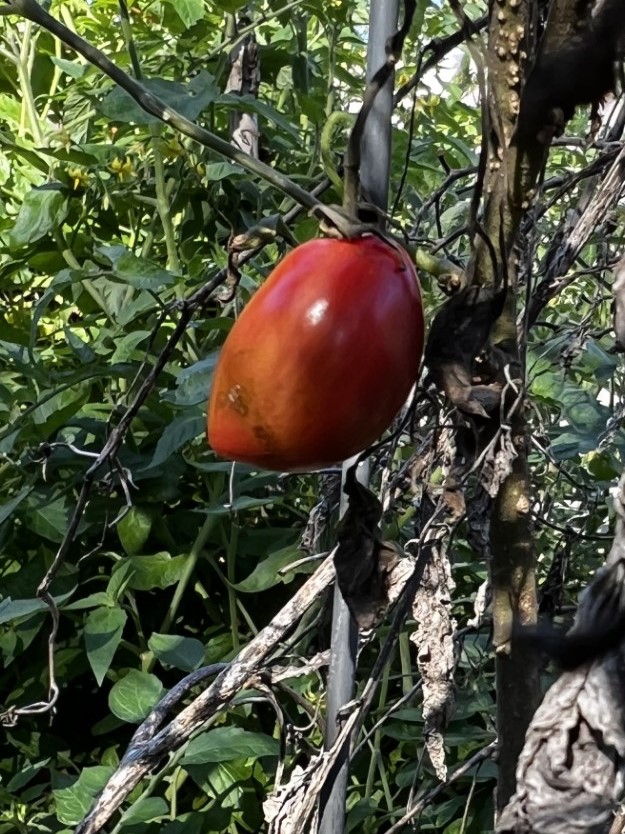
Quite a history here. I find it interesting that in the last 70 plus years the long duration between freeze dates is a year or longer, with 1932 being over a 2 year duration between freezes…..Hmmmmmm!!!!! Global what?????A green SweetieA red oneHopefully soo to ripenNot holding my breath to see these set and bare fruit!!!!!
It won’t be much of a harvest but it does make me smile a bit. My lemons are doing well, beets are coming up and I will be planting more of them. The bees are flying when the sun hits the hive and when above 50ish degrees F. I have feeders on the front of the boxes but it is too cool to feed syrup. I am using sugar blocks that I make, about 1 pound each, and place them on top of the frames in the top box. Recipe…..6.25 pounds of sugar, 1 cup apple cider vinegar and packed into a 9X13 jelly roll pan. About 3 pounds per pan. Dehydrated and when hard and firm they are ready to go. Typically they last about 1.5 weeks. I do grab the back side of my hives and heft them…..If I grunt a little bit as I lift I am happy with their weight and won’t worry about them starving…..yet…..
Pretty active…..and surprisingly they are still finding pollen but I missed the chance to photograph it coming in. Trust me……a nice yellow pollen…..no idea what flower though…..Some dandelions are in the area. This hive and the one adjacent to it will be bartered and delivered to a friend this week end….Bartered for a day or two guided fishing ……, Thanks Clayton and Aurora. Yee Haw, the Redfish are biting.
My small varieties of tomatoes are kicking in. The larger red ones are called Juliet and they do really well throughout the hot and humid Houston summers. The small ones are called Sugary and yes, they are sweeter. Hopefully they will do well through the summer. None of large varieties have started to show color yet but, thankfully, even with the abundant rains recently , they show no signs of cracking or splitting. The 25 cent piece in the photo is for reference on sizes.
Juliet and Sugary bunching type of tomatoes. Both are yummy. The Brandywine, Cherokee Purple and Celebrity will ripen in the next week or so. My cucumber support. I used 3 panels of 4″X7″ reinforcing wire used in pouring driveways. Cattle panels are used by some people but they are heavy and pricier. Market More variety planted here. The fourth panel I used to create an arch entering the garden. I have planted Blue Lake Pole beans here and they climb like crazy. Should also make it easier for me to harvest. I will promise to provide some follow up as the grow.
I added 3 mounds for some Early Yellow Crook Neck squash. I haven’t had much luck with summer squashes in the past here in Houston but have not tried this variety. Also planted Mammoth variety sun flowers and they truly are Mammoth. Sometimes rising more than 10 feet and the seed heads are maybe 15-18 inches across. The bees adore them and our local squirrels do too…..LOL
I do have potatoes to harvest in a couple of weeks. Red potatoes and some Yukon Gold. I will clean out the beets…..some of them have become huge. I will see if they are worth salvaging. The sugar snap peas are done…..hopefully I will do better with the Fall plantings of them. The Meyer Lemon tree has set a good number of fruits and another round of blossoms has just appeared….not sure about them but we will see. Honey harvest is still 2-3 weeks away. We have a very long waitlist and they are our faithful buyers, I hope I do not disappoint them this year.
My Muscadine grape vine looks really healthy this year and as the grapes begin to develop and mature I will post photos. At this point in time the blossom heads are tiny, tiny and just now starting to open up. My other challenge with the Muscadine Grapes will be fending off the robbing birds and I suspect some squirrels get tempted. My wife won’t let me pop the squirrels with the BB gun but I do have bird netting as an option….time will tell.
The small varieties are setting tons of tomatoes and today, May 4th was my first picking……not many but the gates are open. I guess Mother Nature whispered……”May the 4th be with you”……LOL. Yes, “kinda” corny, but I couldn’t resist. The surprise for me today, upon my return from babysitting grandsons in Denver, were the number of tomatoes set on my Brandywine vine…..I promise some photos later in a week…..maybe less.
Small and so very sweet.
I have quite a few beets that have blown up into to monstrous sizes in the past few weeks too. Hope they will still be edible. Sugar snap peas are almost done and now I need to get my Blue Lake Pole beans going. My two eggplants are blossoming but no fruit yet. The plants are robust looking so I think I may have some eggplant lasagna in the future. I was gone for 8 days up to Denver and the weeds have jumped ahead and will keep me busy for the next week or more.
Bees……next few days and into next week will find me evaluating the honey stores and looking to see if I can rob any to take care of my customers. wish me luck!!!!!!!!
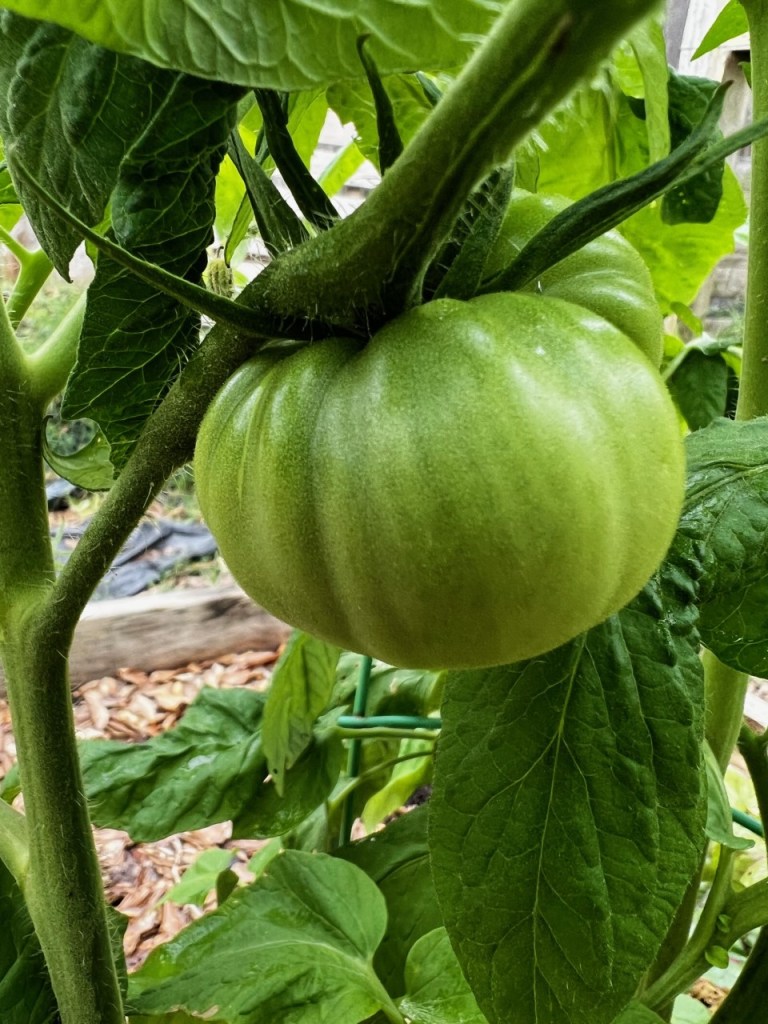
No, it is not an exponential equation but does reference that I have have only planted 5 tomato plants and each is a separate variety. Three of the 5 should be robust enough to produce well into the summer. The heirloom Brandywine will be coddled, buzz pollinated and well protected until the heat causes it to not set fruit. I have green ‘maters now so it won’t be long before they ripen. Images are from East to West in my garden.
East-most is a smaller fruited variety called Sugary. This should be one of the 3 to hold well into the summerNext is Juliett, a small roma shaped tomato that can overwhelm the garden. Slice it and it makes a nice caprese salad.Celebrity – A very good and prolific slicing tomato….not too big but very consistent into summerCherokee Purple…..I am anxious to try this one and know little about it other than seeing it at Farmers marketsBrandywine …..The flavor of this heirloom tomato is out of this world…..but….fruit sets with great difficulty. I have successfully been able to get fruit set by buzzing the flowers with an electric toothbrush, mine and god forbid I used my wife’s.
Beets are almost done and I am ready to add some Blue Lake pole beans. Bees, all 15 hives, are all busy and hopefully late May will be a good harvest. I have a couple of projects….rebuilding the compost bins…..a big project. Clear out all the junk lumber and wood that I have accumulated. Put up some trellis apparatus to help the cucumbers climb…..they grow so well here in Houston. Potatoes are also looking good this year….can’t wait to dig them up.
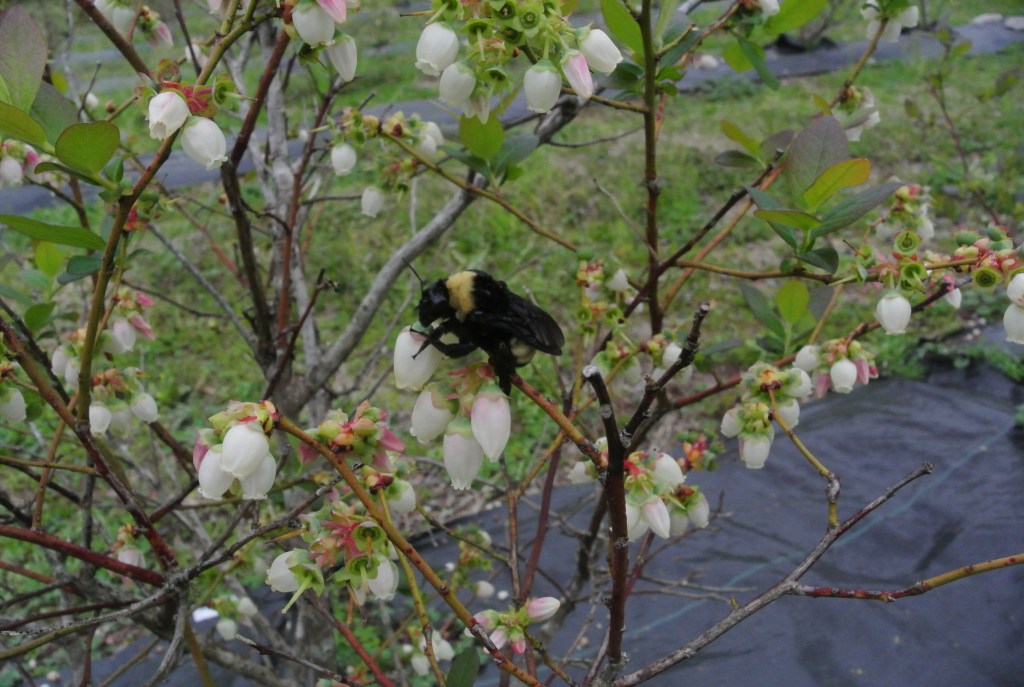
“Surprise, surprise, surprise!”…… to quote Gomer Pyle USMC, and of course “Shazam!”. Yes honeybees are used but, they may not be the perfect choice! I am going to include a link to an article from North Carolina State University that will tell a very detailed tale of blueberry pollination in that state’s commercial blueberry fields and mirrors some of my lay observations on a local blueberry field where I kept some bees for a few years. The location was just a bit too far from home to effectively care for the hives. My observations got me thinking…..I had three strong hives on the property and when the flowers were blooming I saw more bumble bees visiting the flowers than honey bees……the honey bees seemed to be more active on the adjacent blackberry vines…..There had to be a reason of some sort!
“Numerous native bees (including bumble bees and solitary bees) are indigenous pollinators of blueberry plants in North America. In addition, honey bees are used extensively by growers to augment populations of native pollinators. Bees are attracted to the flowers by odors and sweet nectar that is produced by glands near the base of the stigma. Both pollen and nectar serve as food for the bees and their offspring. As insects visit blueberry flowers, pollen adheres to their bodies and is carried with them as they move from flower to flower. When bees probe for nectar inside a flower, they brush against the stigma and unwittingly leave behind some of the pollen they are carrying. Some species of bees vibrate each flower with their flight muscles as they collect pollen. This buzzing activity (known as sonication) shakes pollen from the anthers so it is easy to collect, and also tends to increase pollination” will occur.
I wrote this several months ago and found it in my saved for future editing so I resurrected it just in time for Easter. I hope you like it.
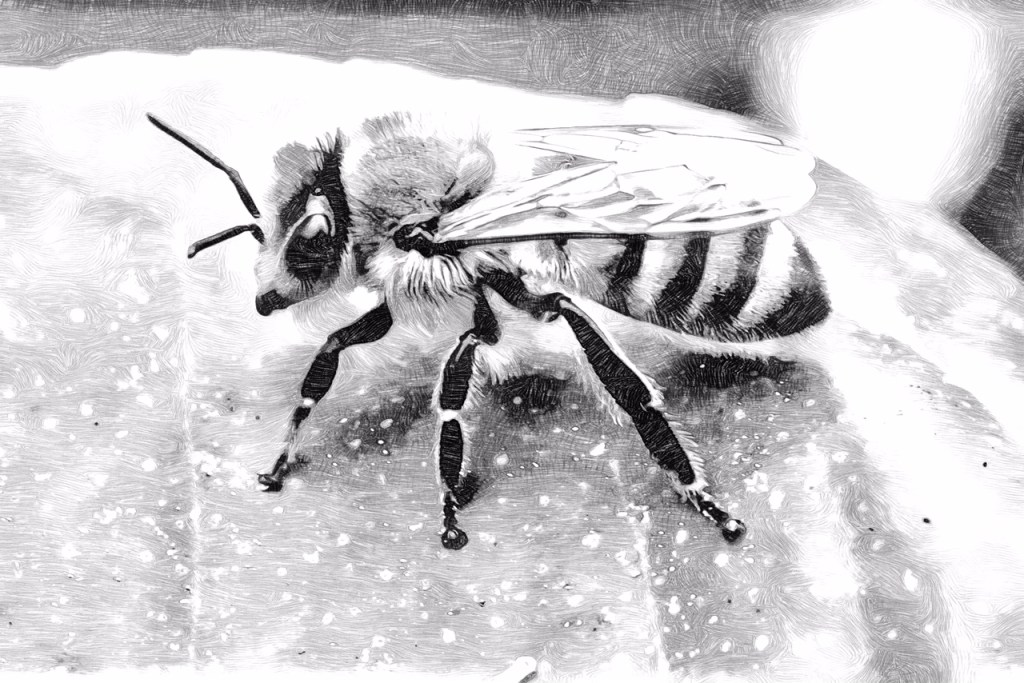
Pay attention to the flower size compared to pollinator size……this is either a bumble bee or ? I don’t believe our area is native to the Southeastern Blueberry Bee! These big guys use a form of pollination called “buzz pollination”. Electric toothbrushes work well too……LOLOne of my honeybees I suspect from one of my hives nearby. Note the size difference to the other pollinator working the blueberries above.
Yessssss Buzz pollination is a thing and I have had success using it on heirloom tomatoes that do not set fruit when this Houston weather gets warm and sticky…..like way too often. I have used an electric toothbrush, sadly my wife won’t let me use hers so mine is the vibrating device that does the trick. I will be doing some of that today as my Brandywine Tomato is beginning to set display flowers. Check out one of my long, long time ago posts broaching the subject with an included video of the technique. It is very effective.
About 5 weeks ago I began to ready my garden for fall and put some cool weather veggies in. I planted seeds for beets and Sugar Snap peas. We had been in a long period of drought here in the Houston area and the prospects for rain were slim. My poor luck was made worse by an extended period of time spent out of town to help out with grandkids thus, the seeds failed to germinate. I should have drafted some help to water in my absence but did not. So, today I added carrot seeds and beet seeds. I know that beet seeds are not the typical looking seed that you would recognize.
Beet and chard seeds are multigerm seeds. (Quick botany lesson: The germ is the reproductive part of a seed — the embryo — that grows into a new plant.)
Multigerm seeds occur when flowers grow in clusters, fused together by the petals (such as the flowers on a beet plant), which then produce multigerm seed balls.
I intend to do my beets in a long row and do succession planting every few weeks. This phase 1a ….. as Phase 1 failed.In this area I am doing carrots that I have broadcast in 4 wide bands and will thin once they begin to sprout. Two varieties, Red Rocket and Danvers. They both seem to do well in our dense soil here in the Houston area.
I have challenged myself to do a better job keeping the seeds wetted this go around. Our weather is chilly for the next few days or two but next week we are back up into mid 80’s and mid 60’s at night. Perfect temperatures for the seeds and “multigerm seeds” to germinate. Insert smiley face here…..
Sugar Snap Peas are soaking tonight and will go into the ground tomorrow. I always let them soak over night and imbibe enough water to fill out the wrinkles…….Hmmmm maybe I need to imbibe a little more and see if my wrinkles will fill out! I wonder if beer would have the same affect on me. Maybe a winter time experiment.
Shifting gears. I have two large 4X4X4 compost bins and I am pretty consistent hauling kitchen scraps, egg shells and coffee grounds out to the bins. All of my grass clippings and leaves wind up either in the bins or as mulch helping to smother the weeds. (a never ending challenge). I am a bit proud of the fact that I have not sent any grass clippings nor any of my Fall leaves to the landfill in over 10 years. About 5 years ago I gave up on turning and tilling my beds and they seem to be as productive as ever. I have hired several thousand earth worms to till for me and because of their anatomy I have not paid one back injury claim, even though I employ thousands. (tongue in cheek)
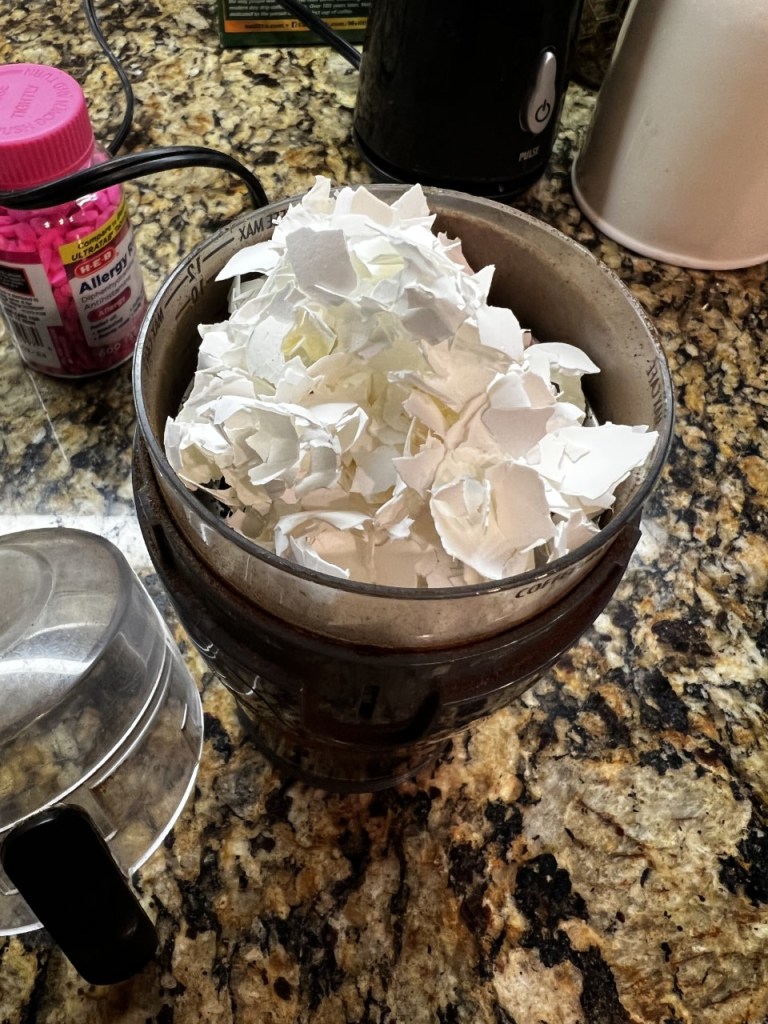
I know that my egg shells take forever to break down so I have started drying them and pulverizing them in my coffee grinder. I do grind coffee every couple of days and I decided to tolerate and residual calcium dust in my grinder as a bit of dietary calcium. so far no ill effects …….. fingers crossed. The article I read suggested using a mixer, coffee grinder or a mortar and pestle to reduce them. My mixer wouldn’t be very efficient, mortar and pestle sounds like work and my arthritic hands would protest, so…….the coffee grinder is my choice.
Dried and ready grind up into some dust.I probably could have spun these in the grinder a little longer. I am bagging them now and in the spring I will add them into the planting holes for tomatoes, reduces blossom end rot and for my peppers.
Plants like tomatoes, peppers and eggplants in particular will benefit from shell fertilizer. The extra calcium will help prevent blossom-end rot. Broccoli, cauliflower, Swiss chard, spinach and amaranth are also calcium-packed and could use extra from eggshells. So there you go…..waste not want not. Just in case you were curious about he origin……and I was….I assumed it was from Benjamin Franklin but was proved wrong
“We’ve all heard the proverb, “Waste not, want not.” This old saw has its origins from 1576 in, The Paradise of Dainty Devices by Richard Edwardes, a distinguished lyricist and playwright who was rumored to be an illegitimate son of Henry VIII. On page 88 the proverb was written as: “For want is nexte to waste, and shame doeth synne ensue.”
In 1721 the saying was recorded in an easier to understand version: “Willful waste makes woeful want.” Then, on August 10, 1772 in a letter to Alexander Clark, John Wesley wrote the saying in the more familiar: “He will waste nothing; but he must want nothing.”
All of the various forms of this proverb get at the idea of how we can always have just what we need. The less we waste (or acquire), the more resources we save and the less we’ll want for anything later. Waste not, want not reduces the risk of poverty and need. Put another way, many of us are saving money for something we’ll need or can afford in the future (savings). We will opt to not have what we may want/desire now in order to preserve what we need/want in the future.”
Maybe it will come up one day in trivial pursuit or on Jeopardy and you will be well armed.
I may have mentioned it in an earlier post, but my new favorite tomato, just a notch above #2 Brandywine, is Cherokee Purple.. I quizzed my wife today and she agrees with my assessment. It is not truly purple but has been described as “beautiful, deep, dusky purple-pink color, superb sweet flavor, and very-large-sized fruit. … From Baker Creek Heirloom Seeds. Both the color and flavor descriptions are dead on!
From Baker Creek Heirloom Seeds website. From my garden next to a very large Brandywine…..the photo can’t quite capture the colors.
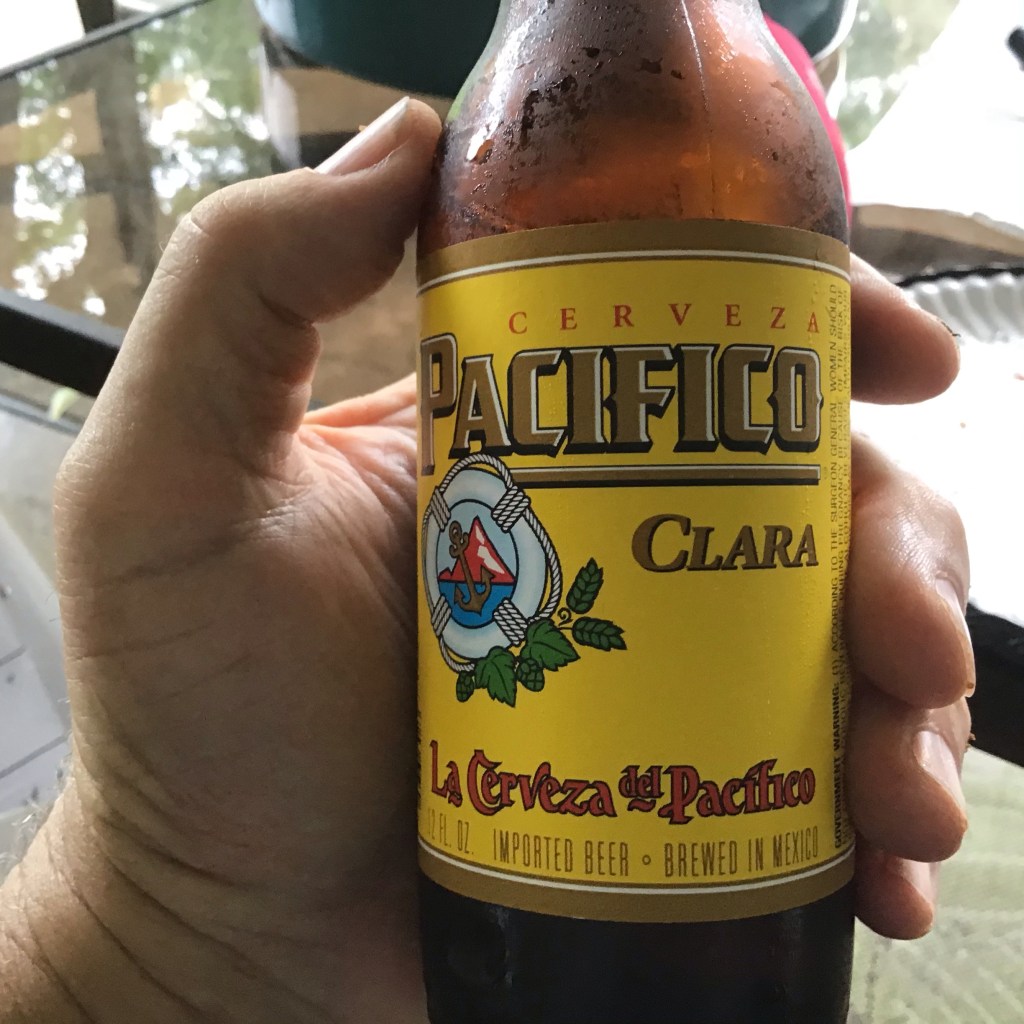
This tomato has become my favorite BLT tomato, especially when paired with my sourdough bread. Ok, just to pat myself on the back, no yeast used and allowed to ferment about 20 hours before baking. Of course, I also like to pair the sandwich with a beer, today it was a Pacifico, Mexican Pilsner!
I may try my hand at brewing one…….a bit more time consuming as it needs to be fermented at 50 degrees F and after a rest at room temperature, lagered at 34 degrees F for 6 weeks or so….Yum!Last night’s sourdough loaf. Damn I am pretty talented with a few things…..LOL!
Garden news, surprising success with summer squash this year, cucumbers are kicking in, pumpkin vines are going wild and the late summer tomato plants are in the ground. Cleaning out and spreading completed compost out of one bin in the next week or so. Honey harvest is dying down….maybe 300 pounds or so.
This has been a pretty good year for tomatoes in my garden even though facing the nemesis of the Houston heat and humidity. Most varieties tend to fade as the heat sets in.
Successes – Juliet, a smallish bunching type off indeterminate tomato. Like a small Roma shaped tomato, thick skinned, meaty and pretty sweet. Patio tomato– in a pot on the patio – duh, a determinate type. Very productive but slowing down with the heat. Brandywine, an indeterminate and tough to grow in the Houston heat as the blossoms don’t set well. I used buzz pollination, electric toothbrush vibrating the blossoms, and had my best harvest ever. Cherokee Purple, also an indeterminate type, what a great surprise! They have made the best BLT’s ever!
Failures – Celebrity, indeterminate type, usually great in Houston……fungus of some sort. Pulled it out after 10-15 maters but not before the fungus hit the adjacent Sweet Million cherry tomato. The failures may have more to do with my lazy practices…..the tomatoes were all in last year’s tomato bed….poor practice!
Bruschetta- my tomatoes, my basil and my homemade sourdough. I didn’t make baguettes but pleased with the results just the same. I used a mix of tomatoes to make about 3 cups of peeled, chopped and drained tomatoes. Added several thinly sliced garlic cloves along with ribbon sliced basil. Sea salt and some black pepper, extra virgin olive oil and balsamic vinegar to taste. Let it chill for a few hours.
The sourdough loaf was quartered and the pieces were manageable.
Next, my sourdough, thinly sliced and toasted on one side in the broiler. Then the toasted side was rubbed thoroughly with a large garlic clove cut in half. The roasted bread seems to grate off the yummy garlic. I used every bit of the garlic halves. The olive oil drizzle was left off until served and then added by the slice as it was consumed.
Love my sourdough bread. I am using a slow proofing schedule that really enhances the flavor.
It has been too long between posts so I wanted to let all y’all know that I am still kicking and busy. Well, for a couple of weeks I was busy relaxing in Los Osos California “braving” the chilly 52 degree F mornings as my garden and friends back in Houston were sweltering. Damn, I had to put long sleeves on, slept with the window open under a comforter….wow, I could get used to this. All good things are subject to change….I had to pack up and return to Houston.
Upon my return my cucumbers had succumbed to the heat and the white flies, yes, I knew it would happen. A couple of the tomato plants had also passed away…RIP….But they were making way for an August planting to provide good veggies into the Fall. I will replant!
Cucumbers are going int first. I will load the bed up with compost and plant a couple of varieties. The English cukes did really well this year so more of them and then a bunch of Straight 8 variety. The local honeybees love visiting my Cukes!
August appears to about normal in term of temperature and maybe a bit more damp than normal so it should be good.
With my tomatoes, I may try an heirloom or two. Get them established while it is warm and hopefully enjoy the cooler temperatures going into the fall. Pink Brandywine and Cherokee Purple will be high on the list.












 From My Backyard