Home

Fourteen Papaya Trees

2 Comments

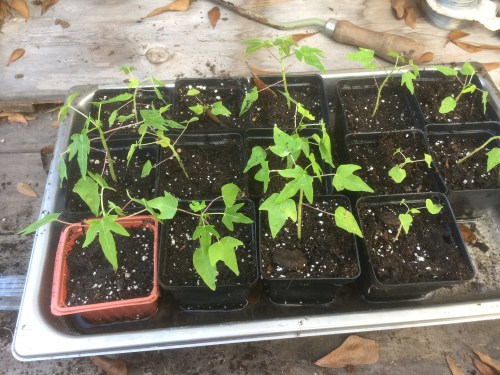
I think I have had pretty good results by dumping a handful of seeds into a pot. Another balmy 78 degree in Houston. With sweat dripping down my brow I teased the roots out of the tangled mess and now have 14 little trees in 4 inch pots. The weather for the rest of the week continues to look balmy. The roots should take hold.

img_2419

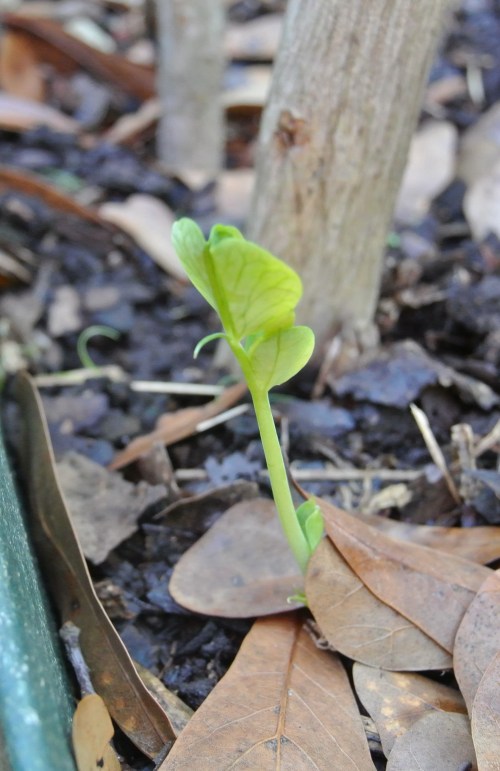
14 trees soaking and looking pretty darned good.


img_2420

A closer look at one of the more robust seedlings. I am excited.

A web search indicates I may have fruits in 6 – 10 months. Seems like a very short time frame to me but sounds good.

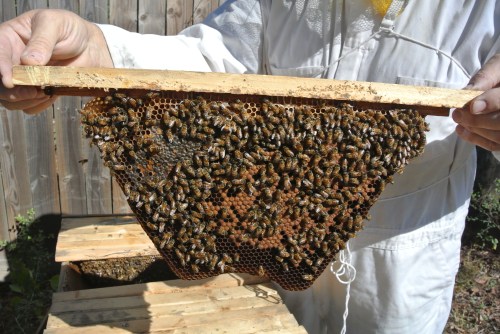
I went and visited the hive in the yard where my papaya seeds originated. It was late afternoon and the comings and goings were a bit slow. I think I need to do an inspection mid day tomorrow, weather permitting. I don’t want another colony to abscond!

TTFN

Bishop


Wild Harvest

1 Comment

The lazy approach to this post. I have made jam from Texas wild dewberries and jelly with wild plums. I and anxious to add a jam or jelly from each to the wild Texas offerings from below. This is an article from Texas Parks and Wildlife, link included.

Use Texas’ bounty of native fruits for your next pie or jelly.

By Dyanne Fry Cortez

Illustrations By Clemente Guzman

http://tpwmagazine.com/archive/2013/aug/ed_3_wildharvest/

I still recall the summer I discovered mustang grapes.

I was 18 years old, working in a Youth Conservation Corps camp at Inks Dam National Fish Hatchery. One of our projects was clearing undergrowth from the Colorado River bank west of the rearing ponds.

When we started, the place was a jungle. It had huge, lovely shade trees, but they were hard to find in the tangle of weeds, shrubs and vines. Any visitor who wanted to bushwhack a path to the water risked a run-in with poison ivy. Within a week, nearly everyone on our crew had a rash.

Less hostile, but equally abundant, were the gray-green, heart-shaped leaves and twisty, grooved wood of wild grapevines. I’d seen them before (they’re everywhere in the Hill Country) but didn’t know they actually produced grapes until I glanced at a vine we’d just chopped down with our loppers and pruning saws. It was loaded with small clusters of round, deep-purple fruit.

Mustang Grapes

Mustang grapes make a zingy grape jam.

Assured by a supervisor that they were safe to eat, I picked one and gave it a try. Extremely tart, but it had a definite grape flavor. Within the fleshy outer skin, a sweetish blob of white pulp enclosed several seeds. I looked up and saw more grapes hanging in the trees. Not the kind of thing you’d eat by the handful, but they were so pretty. In my teenaged, tree-hugging heart, I just knew they had to be good for something.

On my next off-duty afternoon, I “rescued” a tub of mustang grapes from the riverbank and dropped them off at my mom’s house in Burnet. When my summer gig ended, I came home to jars of zingy grape jam.

Since then, I’ve spent many a July day in search of wild grapes. Along the way, I’ve gotten acquainted with dewberries, agarita berries and prickly pears. There are wild fruits all over Texas. Finding them, gathering them and turning them into something good to eat add up to a great recipe for connecting with the outdoors.

Free food, you say? I wouldn’t call it that. Some wild fruits grow in inconvenient places. Many are armed with thorns or other natural defenses. Some seasons produce abundant crops; other times, it takes a lot of foraging to gather a batch. And some harvests are followed by days of work in the kitchen.

Maybe it’s the challenge that attracts me. Or maybe that first spoonful of mustang jam gave me a lifelong taste for untamed flavor. Here’s a sampling of what Texas has to offer.

Agarita (Mahonia trifoliolata)

Range: Edwards Plateau and Trans-Pecos, may appear in other areas
Harvest time: May to early June

agarita

Agarita

With sharp-pointed leaves and red berries, this hardy shrub resembles a holly, but actually belongs to the barberry family. Agarita grows under oak and elm trees, along fencerows and at the edges of wooded areas. Plants that get sun at least part of the day are more likely to produce fruit.

Picking agarita fruit is hard work. The berries are small, a quarter-inch or less, and well protected by the prickly foliage. My favorite way to harvest them is to spread a sheet on the ground and whack the bush with a broom handle or other suitable stick. Scraping branches with barbecue tongs works, too. You’ll lose some fruit in the dirt (but they’ll be enjoyed later by wild creatures), and you’ll get a lot of leaves and twigs mixed in with your harvest.

Back home, I dump the whole collection into a large cooking pot, fill it with water, and let it sit for several hours. Leaves and dirt sink to the bottom; berries float to the top, where I can scoop them out with a strainer. That’s the idea, anyway, and it sort of works. If I spend half a day picking and wind up with two gallons of cleaned fruit, I feel as if I’ve done well.

Agarita makes a pretty red jelly with a flavor all its own. I’ve also seen recipes for a sweetened juice cooler and an agarita wine.

Dewberry (Rubus trivialis)

Range: East and Central Texas, coastal river valleys
Harvest time: May

Dewberry Agarita

Dewberries

Dewberry is a wild blackberry that grows on a low, trailing vine. Its thorny stems and white, five-petaled flowers mark it as a member of the rose family. Berries start out green, then turn red, but are sweetest when they’re black and fully ripe. This is one wild fruit that’s good to eat right off the vine. It’s also good for pies, cobblers and preserves.

Botanist Scooter Cheatham, director of Useful Wild Plants Inc. and lead author of its multivolume encyclopedia, offers this tip for Texas wild harvesters: “When the dewberries are ripe, the green [mustang] grapes are coming along. If you can’t find enough dewberries, put in an equal amount of green grapes, and it makes a scrumptious cobbler.”

Mustang Grape (Vitis mustangensis)

Range: Eastern two-thirds of state
Harvest time: May through July

Several species of wild grapes are native to Texas. The tart, highly acidic mustang grape is the most common. It climbs trees and drapes itself over fences. Large, old vines can be found in wooded areas. I’ve gone hunting many times and found a good bit of fruit hanging too high to pick, even with a good ladder. When they’re within reach, grapes are easy to harvest. Pull them off the stem one by one, or clip clusters with a small pair of garden shears and remove the stems later. Wear latex gloves: the acid in the fruit can irritate skin and leave hands itching for days.

Guten Appetit!, a cookbook published by the Sophienburg Museum in New Braunfels, offers this advice on picking green grapes for preserves or cobbler: “Use grapes that are not mature, about the size of an English pea and before the seeds are hard.” For my own jam, I wait until they turn purple in July.

Other Vitis species grow in various parts of Texas. Wherever you live, there’s probably a vine nearby that could provide fruit for jam, jelly, cobbler or wine. All of our native grapes are dioecious, producing male and female flowers on separate plants. Only female vines will bear fruit.

Western Mayhaw (Crataegus opaca)

Range: East Texas near Louisiana state line
Harvest time: April through May
mayhaw

Western mayhaw

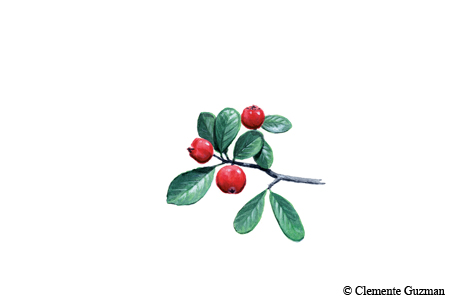
Mayhaw is a type of hawthorn, a small to medium-sized tree that flowers in spring and produces a cranberry-red fruit. It grows in acid soil along rivers and sloughs, often standing in shallow water, but will also grow on dry land. Jim McNeill, a jelly maker of long experience, had a grove of large mayhaws at his home in Nederland.

“They were probably in excess of 75 years old, but Hur­ricane Ike flattened them,” he says.

The fruit falls off when it’s ripe, and mayhaw pickers harvest it from the ground. McNeill would spread a sheet under his trees, catching the fall over several days. If spring rains come at the right time, some locals gather the fruit by taking boats up the backwater sloughs. Rising water lifts fruits that have fallen at the river’s edge, and people scoop them up with nets.

McNeill uses a three-pot steamer system to extract juice for jelly. “Raw mayhaw extract is so bitter it would roll your tongue,” he says, “but the jelly is tops, I gotta say. It’s about the best, other than maybe fig preserves.”

Texas Persimmon (Diospyros texana)

Range: Central and South Texas, Coastal Plains and Big Bend area
Harvest time: Fall
persimmon

Texas persimmon

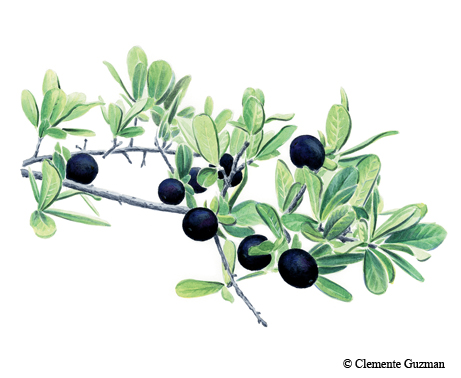
A small tree with attractive peeling bark, Texas persimmon produces black, tomato-shaped fruits about an inch across. As with the wild grapes, fruit appears only on female trees. Common persimmon (D. virginiana) grows in East Texas and makes a slightly larger, orange-colored fruit. Persimmons contain high levels of tannin and are not fit to eat until they fully ripen, begin to wrinkle and go soft.

“When they look bad, they’re actually good,” reports Scooter Cheatham.

Ripe fruit can be eaten fresh or baked into puddings and breads. I’ve seen recipes for persimmon jelly, but never had much luck getting it to jell.

Plums (Prunus species)

Range: Statewide
Harvest time: July through September
plum

Plums

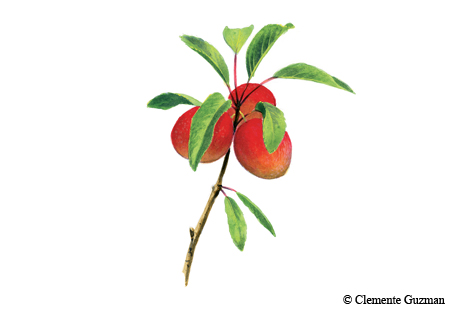
Texas is home to several species of wild plums. The most common, perhaps, is the Chickasaw plum (P. angustifolia), a small tree that forms thickets on prairies and savannahs from East Texas to the Rolling Plains. The rose-colored plums can be picked and eaten right off the tree. Mexican plum (P. mexicana) trees grow larger, up to 35 feet, and are more likely to be found scattered among other trees in riparian woodlands. Its purple fruit is less palatable on its own, “but it makes wonderful preserves,” Cheatham says.

Prickly Pear (Opuntia species)

Range: Statewide
Harvest time: Late summer to fall

Prickly Pear Cactus


Prickly pear

It may take an expert to identify the particular species, but most Texans know a prickly pear when we see one. The plants produce showy flowers that mature into cylindrical fruits known variously as pears, cactus apples or tunas. The flattened stems are usually armed with wicked spines. The tunas have spines too: clusters of tiny stickers called glochids, more treacherous because they’re so easily overlooked. Tunas can be eaten fresh, but take care to peel them first.

When harvesting prickly pear tunas, it’s best to wear protective gloves, long pants and boots. Katy Hoskins, who grew up in the Trans-Pecos area and now lives in Sweetwater, uses barbecue tongs to pick tunas off the plant.

“Then I hold them with a meat fork and use a hand-held propane torch to sear off the spines,” she says. Prickly pear fruit makes a hot-pink jelly, a syrup for flavoring candy and drinks or a wine that turns golden yellow after a few months on the shelf.

The Responsible Gatherer

You don’t need a hunting license to stalk wild fruit. However, some practices followed by good hunters apply to gathering as well.

Know your target. Just like shooting the wrong bird can get you a stiff fine, sampling fruit from the wrong plant can make you sick, or worse. Don’t eat anything you can’t identify.

Respect the resource. Birds and wildlife eat wild fruits, too, so don’t take more than you can use. And don’t gather fruit or seeds from rare, threatened or endangered species.

Be careful where you pick. It’s against the law to collect plants or plant parts in state and national parks. Parks run by local governments may have similar rules. Picking on public roadsides is not recommended because of safety concerns. Your best bet is to collect on private property, with permission. If you don’t find any of these plants at your own place, check with a friend or relative who owns some land. Many people lack the time and inclination to harvest their own wild fruit, and are happy to let someone else do the work — especially if they get a pie or a jar of jam as part of the deal.

Recipes

Wild Plum Jelly

(From Janell Turner of Claude)

5½ cups prepared plum juice (see below)
6½ cups sugar
1 box Sure-Jell Fruit Pectin
½ teaspoon butter or margarine

Start with about 5 pounds of plums. Remove pits; do not peel. Put in pot with 1½ cups water and cook until tender. Mash through colander to strain. Bring juice to boil, reduce heat, cover and simmer 10 minutes, stirring occasionally. Measure 5½ cups juice into 6- or 8-quart saucepan. Measure sugar into separate bowl. Stir pectin into juice. Add butter. Bring mixture to full rolling boil on high heat, stirring constantly. Quickly stir in all sugar. Bring back to full rolling boil and boil exactly 1 minute, stirring constantly. Remove from heat, skim off any foam with metal spoon. Ladle quickly into prepared jars.

Persimmon Chiffon Pie

Graham cracker crust
1 cup persimmon pulp
4 eggs, separated
1/3 cup and ¼ cup sugar
1 envelope unflavored gelatin
¼ tsp salt

Beat pulp and egg yolks together. Mix 1/3 cup sugar, gelatin and salt in saucepan. Add pulp and yolk mixture to saucepan. Cook and stir until mixture just comes to a boil. Remove from heat and cool, stirring occasionally, until mixture mounds up on a spoon. Beat egg whites until they form soft peaks. Add ¼ cup sugar and continue beating until stiff peaks form. Fold in the cooked persimmon mix, pile into graham cracker crust and chill.

Online Extra: More Recipes

About jellies and jams

When great-grandma made jelly, she cooked it until it jelled using the natural pectin in the fruit. That’s possible with many of the fruits mentioned here, but it’s tricky. When I’ve faced chiggers, rattlesnakes and Texas heat to harvest my fruit, I don’t take chances in the kitchen: I use powdered pectin (Sure-Jell and other brands). The basic cooking and canning instructions are in the box, so the recipes in this section won’t go into detail about that.

The challenge is getting your harvest to the cooking stage, then figuring out the right proportions of fruit, pectin and sugar – because the recipes in the box usually aren’t written for wild fruit.

Agarita Jelly

Place cleaned berries in a large pot and add enough water to cover fruit. Cook until berries start to pop open, or until they appear tender when pressed against the side of the pot with a spoon. Pour fruit and water into a jelly bag and let it drip overnight. It’s okay to squeeze the bag once or twice, gently. Combine one box of pectin with 6-1/2 cups juice and 7 cups of sugar.

Dyanne’s Low-Sugar Mustang Jam

I’ve made grape jam according to a standard Sure-Jell recipe (5 cups grapes, 7 cups sugar), but sometimes I like to dial back the sweetness and let the tart flavor really come through. This requires specially formulated pectin. It’s a little harder to find: look for a box labeled “light”, “low-sugar” or “no sugar.”

Wash grapes, add water to pot and boil for an hour or so. Pour mixture into a sieve and stir vigorously, forcing through quite a bit of pulp along with the juice. Discard seeds and leftover skins. Use one box low-sugar pectin, four cups pulverized fruit and 2-1/2 cups sugar.

Mayhaw Jelly

(Gail Smith, Harvest Time Farm Stand, Canyon Lake)

Cook mayhaw fruit, mash and strain. Use 4 cups juice to 1 box pectin and 5 cups sugar.

Prickly Pear Jelly

(Reprinted with permission from Native Plant Society of Texas News, July/August 1988)

Rub fruit with a heavy cloth to remove the tiny bristles. Or, better still, hold it over a flame and burn the bristles off. Wash and slice the fruit into a saucepan, then add 2 cups water for each cup of fruit. Cook until soft – don’t hurry! – and strain the juice through a jelly bag or several thicknesses of cheesecloth.

For jelly, use:
3 cups prickly pear juice
½ c lemon juice
1 package pectin
4-1/2 c sugar

Marmeladenkuchen (Marmalade Cake) with Green Grape Preserves

(From Guten Appetit!, Courtesy of Sophienburg Museum, New Braunfels)

Preserves
Pick stems and wash grapes (use grapes that are not mature, about the size of an English pea and before the seeds are hard). Put in large kettle with sugar, a pound of sugar for each pound of grapes. For 5 pounds of grapes, add 2 cups of water. Gently boil until a dark red in color, about 3 hours, stirring often.  Pour into sterilized jars and seal.

Cake
1 cup butter
2 cups sugar
¾ cup milk
4 eggs
3 cups flour
2 tsp. baking powder
1 tsp. vanilla
Pinch of salt

Topping
4 eggs
1-1/2 cups sugar
1 tsp. vanilla
2 cups pecan bits

Marmalade – 1 pint green grape preserves (see above)

Cream butter and sugar together; add eggs one at a time and beat. Add milk that has been combined with vanilla, alternately with flour which has been sifted together with salt and baking powder. Pour into a greased and floured pan (9” x 13” x 2”) and bake at 325 degrees for 35 to 30 minutes.

While cake is baking, prepare topping. In large mixing bowl, beat eggs until light and foamy. Gradually add sugar, continuing to beat until very thick. Fold in vanilla and pecans. Remove cake from oven when done and spread marmalade over hot cake. Pour on topping and return to upper third of oven; bake until lightly brown and crusty. When cool, cut into squares and serve.

Mustang Sorbet

(Justin Arecchi, Justin’s Ice Cream, San Antonio)

Put 1-1/4 pounds cane sugar in large jug and fill with water to make 1 gallon. Stir and refrigerate overnight. Add 1 quart strained grape juice and freeze in ice cream freezer.

Berry Pudding

(Marie Offerman, New Braunfels)

Ingredients for 2 servings:
1 cup crushed dewberries (or any other berries)
2 to 3 T sugar
2T cornstarch mixed with cold water. Adding a small amount of berry juice won’t hurt.
Whipped cream

Combine sugar and crushed fruit in saucepan. Bring to boil over medium heat, being careful not to burn mixture. After sugar is melted and mixture starts to boil, stir a few spoonfuls into cornstarch/water mixture, then add that back to the saucepan. Continue stirring on low boil until pudding thickens. Put in bowls and cool. Top with whipped cream before serving.

Prickly Pear Juice – No-Cook Freezer Method

(Barton Hiatt, Dripping Springs)

Pick tunas when they are very ripe, almost ready to fall off the plant. Peeling is optional, because the tiny thorns will be filtered out in the final step. Mash thoroughly with wooden mallet and freeze, which will help break down remaining fibrous material. Thaw mash and push through a colander, then strain again through fine mesh. Juice from the first pressing will be very concentrated; it’s good for some recipes, don’t drink without diluting! You can get a second press from the same mash by adding water and putting it through the strainers again. Juice and concentrate can be frozen or used right away.

Prickly Pear Popsicles

(Courtesy of Baja Arizona Sustainable Agriculture)

2 cups prickly pear juice
1 cup water
2T lemon juice concentrate
½ cup sugar or agave nectar

Blend juice and water; add lemon juice and sugar. Freeze in ice-pop makers.

Prickly Pear Punch

(Courtesy of Baja Arizona Sustainable Agriculture)

Two 2-liter bottles lemon-lime soda
8 oz prickly pear juice concentrate
4 oz lemon juice concentrate (to taste)
10 sliced limes (to taste)
Ice (as much as possible)
 

Christmas Eve in the Garden

2 Comments

It was “77 degrees F” yesterday and I actually worked up a sweat raking leaves to add to the compost bin. It wasn’t too bad….just barely a one T-shirt job. Summer jobs in Houston are typically 3 or more T-shirt changes.

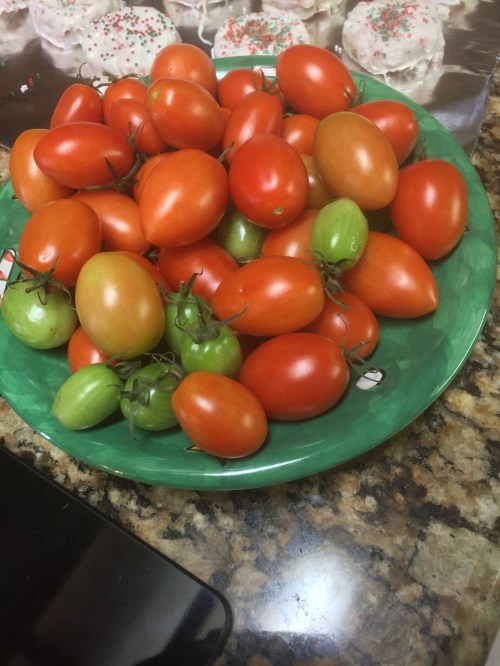
I gathered up the ripening, the dropped and the green Juliet tomatoes. Even covered, the last freeze hit the plant hard.

img_2393

Well the last freeze has made the Juliet tomato plant look pretty sad. I grabbed this handful, green ones included, as the last of the harvest. Yummy Christmas cookies in the background….my secret recipe. Ask for it…

The freeze didn’t bother the strawberries. They handle it well. If I see temperatures in the teens I will definitely cover them. I added another 100 plants last fall……need to treat my babies well!

fullsizerender-strawberry

December 24th and the strawberries are making their appearance.

The colder weather of last week finally started killing off the asparagus ferns. I will find a nice day next week to cut them back and top dress the asparagus bed.

img_2395

A tangled mess. I didn’t get to it but I will cut back the asparagus ferns next week and dream of spring spears.

I will make some Meyer Lemon Honey Jam in a week or two and maybe a small batch of lemon curd….so rich and so yummy.

img_2397

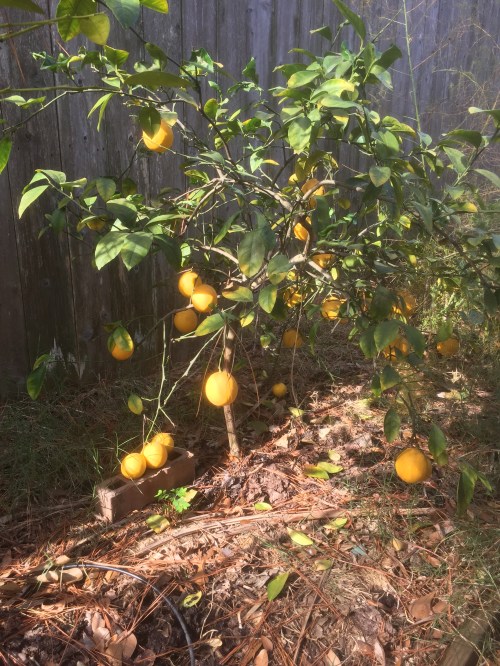
My sad transplanted dwarf Meyer Lemon. I moved it from it’s wine barrel home of 4 years to my garden last spring….hope for better results this next year.

My experimenting will continue into 2017. Mike and Annette, who host one of my hives, have two volunteer papaya trees that bear fruit. Fruit tossed into their compost bin several years ago took off and bear very nice papayas. I saved some of their seeds and put them in a small pot. They are doing well. I will repot and protect the young ones for spring.

img_2401

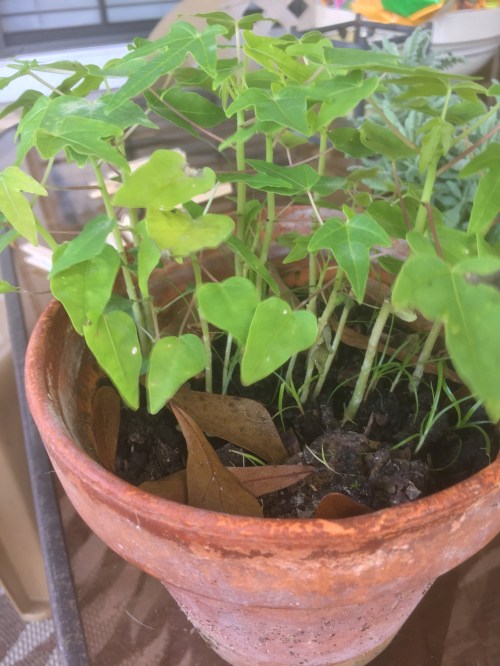
Papaya….I have a hive in a yard here in Kingwood that has two papaya trees. I dropped a handful of seeds into this pot and have been rewarded. Now to transplant them.

img_2404

Merry Christmas

TTFN

Bishop

Homemade Bread -Rainy Day

7 Comments

Texas is getting wet – Today, Tomorrow and most likely a day beyond. Galveston is flooding with over 9 inches of rain and more coming. Eighty miles north in Kingwood we are wet but not flooding. Dark and dreary day and I was feeling a little blue and a little lazy.

I have found a simple French bread recipe that is so easy and so good. Being lazy I let the bread machine do most of the work. I goes so well with soup…..I have a really flavorful turkey noodle soup made with smoked and deep fried turkey from last week.

dsc_0561

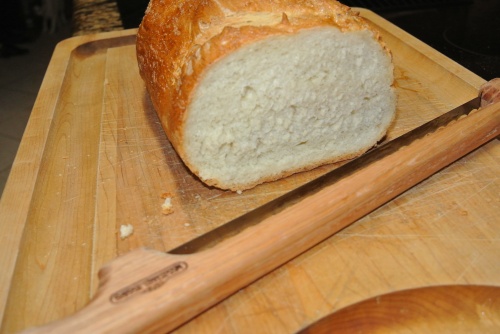
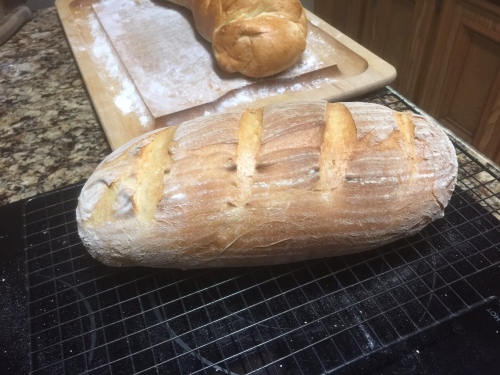
Yum…great crust and texture. So good when warn and “real” butter. Banneton basket used on this loaf.

Today’s version was done using a rectangular brotoform or Banneton Proofing basket. I had no clue what they were until a year or so ago when I was trying to perfect a sourdough bread recipe. I gave up on that endeavor! This French bread recipe is just foolproof.

Recipe

  • 1 1/8 cup lukewarm water
  • 1 1/2 tsp salt
  • 1 1/2 tsp oil or butter – I have used butter, olive oil and coconut oil…all work well
  • 1 1/2 tsp sugar –  I have used my raw local with equally good results
  • 3 cups bread flour
  • 1 pkg of machine bread yeast.
  • Place into the machine tub in the order listed.

Put the machine on the dough cycle. Monitor early in the cycle….I sometimes need to add a teaspoon of water to ensure proper dough consistency. Remove from the machine when complete and shape the loaf. Cover and let rise in a warn place for 60-90 minutes. Add 3-4 diagonal slashes across the loaf to allow steam to escape. I like the looks of the loaf with an egg white wash so it is your choice. Preheated oven to 425 F for 20 minutes and then another 8-10 minutes at 350. Toss a 1/2 cup of water into the oven right off the bat to develop steam for a nice crust.  Listen for the hollow sound when you thump it to see if it is done.

img_2308

Same as the loaf shown above but not brushed with the egg white mixture.

img_2307

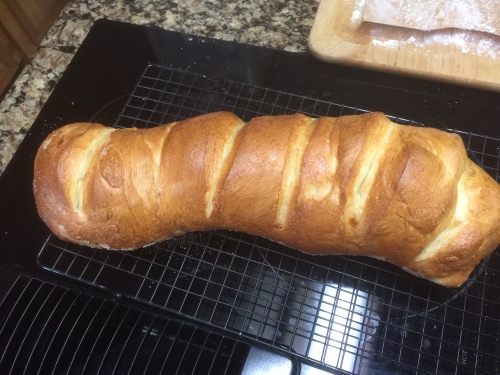
Loaf formed by stretching dough into a rectangle and then rolling it up into a loaf. Pinch the seam together and turn ends under and pinch closed. Bake with the seam down.Oddly shaped but my subsequent loaves have been less misshapen.

Garden notes;

Peas are reaching skyward, beets are still popping up and lo and behold….Swiss Chard has emerged. I have a bunch of soaked seeds needing a home! Oh yes, my dwarf Meyer Lemon tree is pretty well loaded up.

The honey harvest inventory  for 2016 is pretty well consumed. I may have 15-18 pounds of honey in various sizes available. Kingwood locals…..put your orders in!


TTFN

Bishop

Please Peas!

2 Comments

I have been trying to get my Sugar Snap Peas up and going for about 6 weeks. I have planted the pea seeds 3 times with no luck. I am usually gifted with a green thumb and most often have great results with my garden. I have been disappointed with my efforts to get the peas going this Fall. Yes, I have soaked them. Yes, the soil has been the right temperature. But……being a cheapskate, I dug through my box of unused pea seed packages from past years, rather than spend $ 1.89 on current year offerings. The date on the packages is usually just a guide and I have had seeds several years old germinate.

Apparently not this year! About 10 days ago I coughed up the $ 1.89 and bought “2017” dated pea seeds. I soaked them over night, actually a little over 24 hours before planting them. I was a bit concerned as the Houston weather was starting to cool off, soil temperatures should be above 40 degrees F for best germination. The weather cooperated and they have sprouted. Lucked out, it dipped 41 degree air temperature today so I dodged the bullet.

dsc_0557cropped-pkg

The key piece of information – lower right corner – Packaged for 2017

dsc_0559-croipped

Planted 7 days ago….the package info appears to be correct!

Yes dear, I read the instructions! The results are very encouraging. I hope to have some pods in 6 weeks or so….”fingers crossed”. The shoots are working their way up through the fall oak leaves and looking healthy.

I made the same mistake with my beets and Swiss Chard. I finally have some beets up through the soil, but , I am 6 plus weeks behind what I wanted. Yes, I just planted the 2017 beet seeds last week. I am soaking a few more for a second planting……with the cooperation of the weather. Swiss Chard…..2017 seeds in a day or so!

I did have some success with my 2-3 year old carrot seeds…..but I think I may have learned my lesson! Let me write that down so I don’t forget!


TTFN

Bishop


“Maters” and Bees

Leave a comment

The garden is pretty quiet right now. I have a potted Juliet tomato that just keeps on producing, a few pole beans from a volunteer Kentucky Blue wonder variety and now the carrots and beets are popping up. Oh yes, and a large bunch of Burro bananas – hopefully it will be another mild winter and they will fully mature.

img_2309

About every other day I pick a handful just like this….picked these on November 22nd! The plant is still loaded.

Now for the bees. I visited my remaining topbar hive yesterday. Nice sunny day and warm enough to open it up. This hive is the remnant of the colony I rescued over a year ago from a downed tree near downtown Houston. They split themselves several times, I split out a queen cell and a few frames into another topbar, robbed a queen cell for a queenless Langstroth  hive and harvested about 4 bars of honey from the original. They have been gentle and prolific.

I last opened this hive in early October and they had pulled comb back to about the 18th bar. I had intended to move the divider up and shrink the hive for winter but was then distracted and didn’t return. Now, on November 22nd I open it up and they have pulled comb back to about bar 24. Nothing put away at the back end but nice looking comb. I brought six empty bars and intended to remove any empty comb as I slid the divider forward. In hindsight I could have pulled 10 bars of drawn comb…..next time.

I worked my way up into the front third before finding brood. Some pretty good honey stores but lighter than I want so I am still giving them a little heavy syrup until it becomes too cold.

dsc_0539

Nice looking bar….

dsc_0540

A little closer look. About what I would expect for this time of the year.


dsc_0535

Son Joe getting a lesson on lighting the smoker.

dsc_0536

Joe, keeping his distance as I start the inspection.

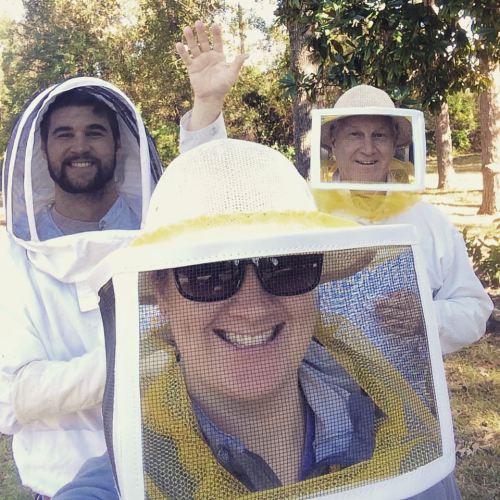
15135867_10100459927768494_3733931257177520101_n

Ashleigh doing the selfie thing with Joe and myself geared up and ready to go.


TTFN

Bishop


Pepper Jellies

Leave a comment

I am doing some Fall clean up in the garden, pulling up the pepper plants, cucumber vines and pulling more of the ever present weeds.

I grew three types of pepper plants this summer. The most prolific of the trio was the Poblano pepper. The Serrano came in second and the Red Bell pepper was a very distant third. An outcome of the clean-up was a large number of peppers to be used/consumed. In the past I have used the poblanos as trading material at the local farmer’s market as well as trading for a dinner at one of the local Mexican restaurants. I need to qualify the comment about the Serrano pepper plant – three weeks ago it was loaded and I failed to harvest. The result today was barely enough to make a batch of Serrano Pepper Jelly. Poblanos to the rescue!

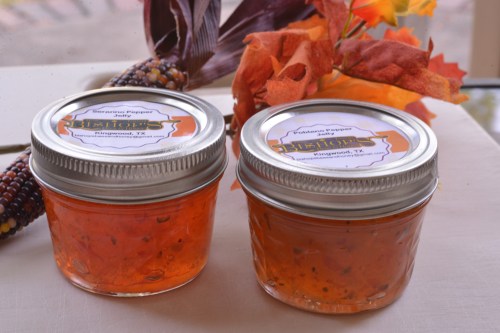
jbd_9951

Poblano on the right and Serrano the left.

First up this morning was the Serrano Pepper Jelly. It so tasty when completed. We mix it with soft cream cheese as a spicy dip. The use of store bought Red Bell Peppers creates a nice red hue and the bits of finely chopped pepper pieces creates a “confetti” look in the finished product. I don’t usually use liquid pectin when making jams and jellies but past pepper jelly efforts have made a less than firm set. No troubles with this recipe.

Serrano Pepper Jelly

Yields 7 8-oz jars or 14 4-oz jars

Ingredients 

§  1 cup chopped red bell pepper

§  1/2 cup chopped green Serrano peppers/Poblano peppers

§  5 cups white sugar

§  1 1/2 cups apple cider vinegar

§  1 (6 fluid ounce) container liquid pectin ( like to use Certo brand)


Directions 

Step 1: Sterilze jars, lids and rings according to manufacturer’s instructions.  Heat water in a Large pot or water canner.

Step 2: Remove stems, veins and most of the seeds of the bell and serrano peppers. Mince peppers in a food processor.

Step 3:  In a 5-quart pot over high heat, combine bell peppers, jalapenos, sugar and vinegar. Bring to a rolling boil; boil for 3 minutes. Remove from heat and cool for 5 minutes.  Skim off any foam.

Step 4:  Stirring constantly, add the pectin and let mixture continue to cool for 3 minutes more.

Step 5: Pour into hot, sterilized jars and top with sterilized lids. Secure lids with bands and put back in pot hot water and boil for 5 mins.  Remove from water and allow jars to cool slowly, creating a vacuum seal.  Jars may make a popping noise as they cool.

 Tip: let cool, gently remove the rim and dry the lid and rings (do this very carefully) so that you do not get rusty lids.  Place rings back on but be sure not to screw too tightly then set overnight. Sometimes it has taken 2 weeks for this jelly to set so be patient.

This recipe makes 14 4-oz jars.  I like to put them in small jars because at this size they are a perfect addition to a cheese and cracker plate.  Isn’t the coloring gorgeous?  The flecks of peppers look like confetti.

http://www.marinhomestead.com/recipes/dessert/serrano-pepper-jelly/

I guarantee that it won’t take two weeks for this jelly to set. I had to use a spatula to get the jelly out of the pot when filling the last two jars from each batch. My yield was a little lower than the recipe – 11, 4 oz. jars. In the future I will smoke some of the Poblano peppers and make a “smoked” Poblano pepper jelly. I plan on using pecan wood…..a nice mellow wood. I have read that some that make Chipolte, smoked Jalapeno peppers, use mesquite for a stronger flavor. Maybe next time I’ll use the mesquite.

jbd_9952

Yummy Stuff.


TTFN

Bishop

Fall Tomatoes and Other Notes

Leave a comment

The Juliet tomato is a prolific tomato in the Houston growing environment. Here it is, November 6, 2016, and I still have ripening tomatoes on the plant as well as blossoms! The tomato is sweet but does have a bit of a tough skin. Doesn’t bother me but some may notice. They look like a miniature Roma and make great sauce. The plants are indeterminate and again, to repeat myself, prolific. Two plants can overwhelm a family.

Stovetop Juliet Tomato Sauce

By Analiese Paik

Ingredients: (double or triple as necessary)

  • 1 pound of Juliet tomatoes, preferably organic.
  • 2 cloves garlic, finely chopped
  • 2-3 T olive oil
  • fresh basil, oregano or parsley (optional)

Method:

  1. Rinse tomatoes and set aside. Chop garlic while heating a pot large enough to fit the tomatoes on the stove. Add olive oil to the pot and when it shimmers, add the garlic and stir until fragrant over medium heat, a minute or 2.
  2. Add tomatoes to the pot along with 1/4 cup of water so the garlic doesn’t burn. The tomatoes will take at least 5-10 minutes to soften up and begin releasing their juices. I like to put a lid on the pot to speed this up.
  3. Once the tomatoes begin to release their juices and the skins start to burst, remove the lid and simmer for another 10 minutes or so until the tomatoes have all lost their skins or are quite soft
  4. Use an immersion blender to puree the sauce right in the pot. Add salt to taste and a chopped herb if you’d like. The flavor of the sauce, with the garlic alone, is rich and complex.
  5. Strain the sauce through a large strainer or food mill heavy enough to hold the seeds and skins. Be sure to push down on the solids to release all the sauce. Cool the sauce and store in the refrigerator in glass containers. When making large quantities, be sure to chill in the refrigerator before freezing.

http://fairfieldgreenfoodguide.com/2013/09/11/juliet-tomato-sauce/


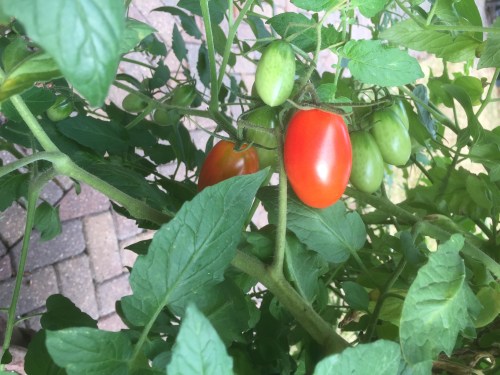
img_2257

Bright Red Juliet tomato and more ripening

img_2258

More and more and hint at how they grow in clusters.

fullsizerender2

A good number of the 100 Chandler strawberries in the ground planted through a weed barrier. Hope to keep the berries cleaner.

fullsizerender

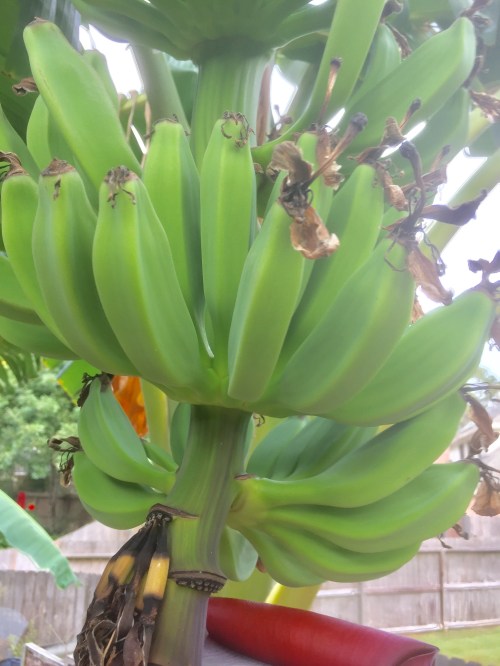
The banana flowers begin to turn upward as they mature. The flower hangs down and the bunch develops and points skyward now.

Other Notes

The Burro banana plant has put on a nice bunch going into, what Houston calls , winter. As I have noted before, last winter I had a bunch survive and ripen even though the plant lost all of the leaves. I left the bunch on and I was rewarded with 40 plus Burro bananas. Fingers crossed I have the same luck.

The Burro and Manzano plants are trying to get ahead of me by sending up shoots. I dug up and potted one of each for a member of the Facebook page, “Texas Small Farming and Homesteading” group. Kim and Jeff live nearby and I delivered the potted plants to them yesterday. Surprise, surprise….they are also beekeepers! Smaller world than we’ll ever know. I guaranteed more if these two died.

I recently put Chandler Strawberry plants out into the garden. I am looking forward to spring and hopefully an epic strawberry jam making explosion. Today will be another round of adding beet, turnip and lettuce seeds. I soaked some snap peas and hopefully they will take off. The previous planting went into the ground without presoaking and sure enough….nothing germinated. I have some accidental pole beans growing from volunteers. Enough for a couple of handfuls for dinner.

Bee stuff……during the next two weeks I should finish prepping all the hives for winter and then make plans for 2017. Hopefully my strongest hives will be ready to split in the spring. I will also build a few more swarm traps…..no luck with the three I set out this year. I made about 8 pounds of “creamed cinnamon honey” this past week. Inventories are getting low…..can’t wait for spring!

Bonus; I am passing along my recipe for cinnamon creamed honey. Not sure I should do this but…..if you really wanted to make it you could do a search and find it just the same….

http://www.tc.umn.edu/~reute001/htm-files/Creamed%20honey%20recipe.html


Ok…..enough for today.

TTFN

Bishop

Fall Bananas

1 Comment

I just returned from a week long trip only to discover that my Burro(chunky banana) plant has opened up and has about 5 hands of bananas exposed with more to be  uncovered. The bees are diving in and enjoying the banana nectar. This planting also produced in mid November last year. I babied the bunches through the cold weather and was rewarded with some nice fat bananas in the spring.

I am overwhelmed this year as I have dozens of bananas frozen for banana bread, smoothies and maybe some more banana jam.

jbd_9897-crop

Bees looking for more banana blossom nectar.

jbd_9904jbd_9907

I wonder if the bees from my nearby neighborhood hives are part of the crew supping upon the sweet nectar?

TTFN

Bishop

So Local You Can Feel it and Taste it!

1 Comment

paoaya

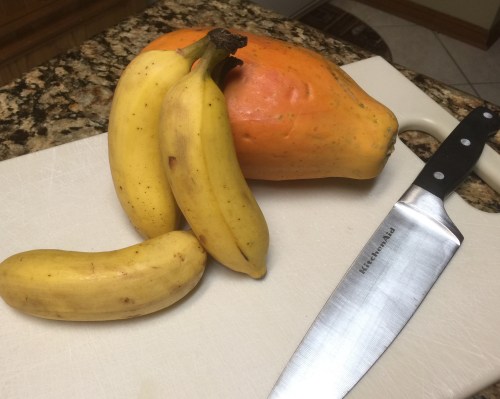
Extremely local Papaya and hyper local Manzano bananas.

I had an incredibly fresh and local fruit snack for this afternoon. How local? I should  probably label it all hyperlocal but I will differentiate. The papaya is from a few blocks away at Mike and Annette’s yard, also hosts to my very productive 8 frame garden hive. There are two mature Papaya trees growing from their compost bins….the discarded seeds apparently liked the environment, therefore, the Papayas are very, very local. The Manzano  bananas are 29 steps from my back door, in my little plot, obviously, very hyperlocal.

Hyperlocal – “”The term hyperlocal has been used in journalistic circles since the late ’80s, but with the changing face of journalism and the development of online media, has now begun to filter into more mainstream use.” http://www.macmillandictionary.com/buzzword/entries/hyperlocal.html

I was going to give Tara Chapman of Two Hives Honey credit for the term “hyperlocal”.  She is an Austin, Texas, based beekeeper with a very interesting background. I took her marketing class at the Brenham Beekeepers school. She markets her honey as “hyperlocal” – named for the Austin neighborhood hosting her hives….I market mine by the zip code of the hive….a little larger than hyperlocal. Check out her website.

Home

Lets get back to my snack. A little google search and I had my papaya prep instructions…a first for me. Sliced lengthwise, de-seeded and sliced into strips, carefully  removed the skin and then cut into chunks. The banana was cut in half lengthwise and then sliced. A sprinkling of lime juice and chill for a bit. Yum.

fullsizerender-pb

The starting point. Yes, the papaya is ripe as are the tasty Manzano bananas.

My  next step? Seed saving and growing my own Papayas…..about 29 steps from my back door…..so very  hyperlocal.


TTFN

Bishop


.

Older Entries Newer Entries